MCR Diabetes & Eye Care · Kannur, Kerala
+91 97444 35552
Diabetic eye screening when your vision feels normal
You can read your phone, recognise faces and drive comfortably, so an eye-screening reminder may feel unnecessary. Early diabetic retinopathy can develop without a noticeable change in sight. [1] A screening visit looks for changes that ordinary vision tasks cannot reliably reveal. It is worth knowing what the appointment covers and how to prepare for it.
Clear sight and a healthy retina are different questions
Diabetic retinopathy affects blood vessels in the retina, the light-sensitive tissue at the back of the eye. The National Eye Institute describes its early stages as potentially symptom-free and recommends regular eye assessment for people with diabetes. [1] Waiting until reading becomes difficult can miss the purpose of screening.
A spectacle test answers whether a lens prescription needs attention. An assessment for diabetic eye changes asks another question. When booking, say that you have diabetes and explain the review that was recommended. Do not assume every visit involving an eye chart includes the same examination of the back of the eye.
Find out what the appointment will include
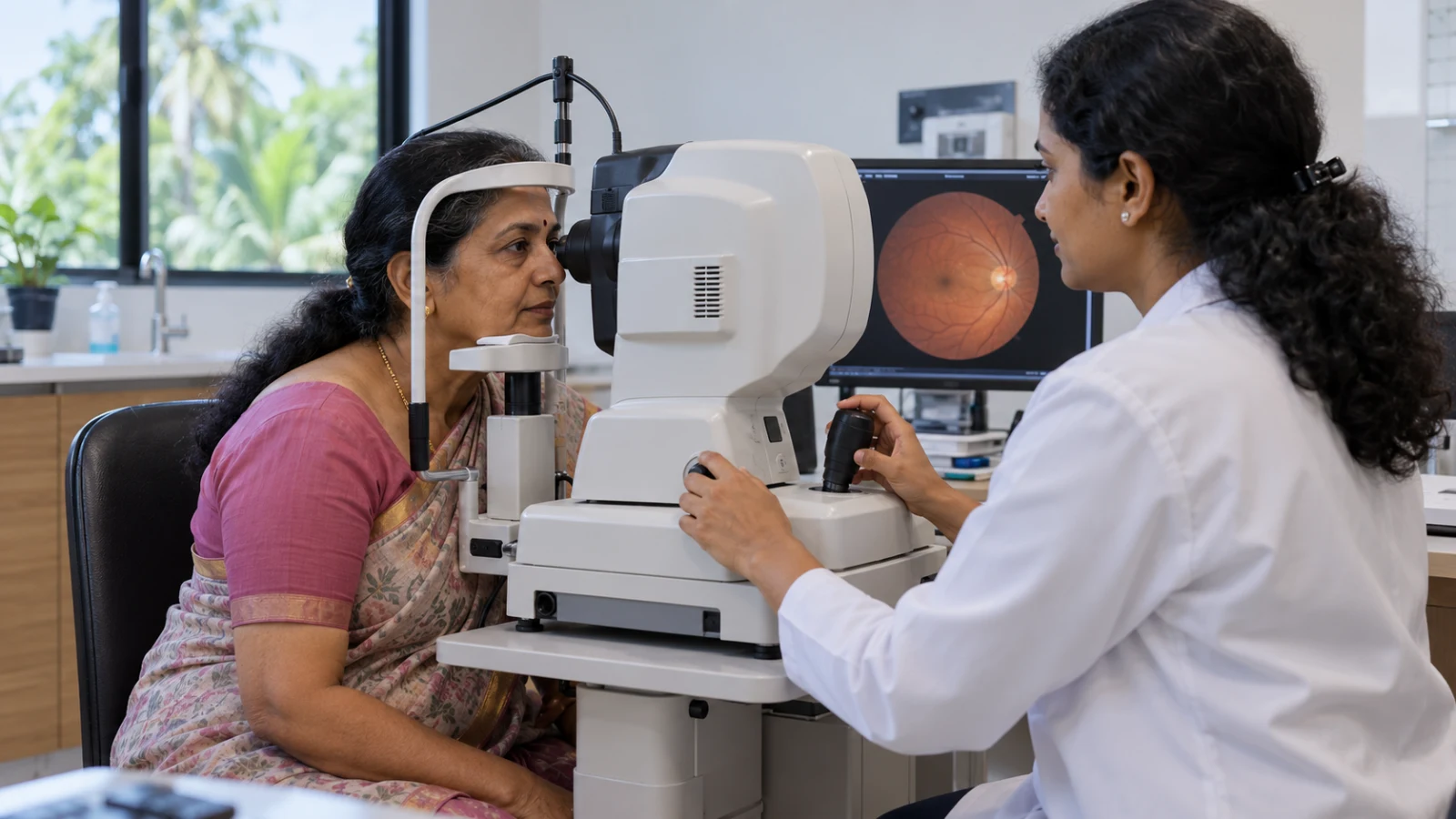
The eye-care team may use retinal photography, a dilated examination or other assessments according to your history and the clinical question. NIDDK describes a full eye examination and notes that the team may recommend additional tests. [2] A quick photograph should not be assumed to cover every possible eye condition.
Ask who will interpret the findings and how you will receive the explanation. If a picture cannot be assessed clearly, ask what examination or repeat is needed. An unclear image is not the same as a reassuring result. Keep the referral or appointment instruction until that next step has happened.
You can ask about cost and expected visit arrangements before attending. The exact equipment, need for drops and time at a particular clinic should be confirmed directly. An overseas screening leaflet does not establish the local booking process or the services available on a particular day.
Bring information that makes the assessment easier
Take your previous eye report, glasses and medicine list if available. Mention past eye treatment, any problems with eye drops and new symptoms. If you cannot find the old report, tell the team where and when the examination happened. You do not need to delay a necessary appointment while searching for perfect paperwork.
Write down whether a change affects one eye or both, when it began and whether it was sudden. "A new dark area since this morning" communicates something different from gradually needing brighter light over several months. Let the team decide the urgency rather than waiting for your routine slot without mentioning the change.
Ask about drops before planning to drive
Dilating drops widen the pupil and can temporarily blur sight or make light uncomfortable. NHS screening information recommends planning the journey home because driving after the drops is unsafe while vision is affected. [3] Ask the local team whether drops are likely and follow their advice about when driving can resume.
Arrange a lift or another suitable way home if needed. Bringing sunglasses may make the journey more comfortable. Do not plan around a fixed recovery time copied from somebody else's appointment, because your own vision and the advice given at the visit matter.
If you rely on a driver who also has an appointment, make sure both of you have considered the return journey. The same planning applies to a two-wheeler. A short conversation before booking can prevent a difficult decision outside the clinic afterwards.
Know what a reassuring result means
Ask whether the result is clear, whether any finding needs another assessment and when the next review is due. A satisfactory examination today is useful information for the current care plan. It does not mean that future screening can be abandoned or that new symptoms should wait until the next reminder.
Keep the report where your diabetes clinician can see it at follow-up. If the eye team makes a recommendation, write down who needs to act on it. If results arrive later, ask how and when to expect them and what to do if they do not arrive. Avoid assuming that silence means everything has been reviewed.
Some symptoms need urgent care rather than routine screening
Sudden vision loss, a new shower of floaters, flashes of light or a curtain-like shadow need urgent assessment. The National Eye Institute identifies these as possible signs of retinal detachment, which is a medical emergency. [4] They should not be managed by booking an ordinary screening appointment weeks later.
Also follow the urgent instructions provided if you develop significant pain or unexpected visual problems after an examination. Tell the service what happened and when. Do not drive yourself if your sight is affected, and do not wait for a family member's routine appointment to ask about a sudden problem.
Make eye care part of the wider diabetes plan
Blood glucose, blood pressure and other health factors belong in a discussion about eye health. [2] Eye screening does not replace day-to-day diabetes care, and good recent glucose readings do not by themselves cancel a recommended eye examination.
If the report prompts a treatment discussion, ask for an explanation of the finding and the options. This article does not choose between medicines, laser or surgery, and it does not imply that every finding requires treatment. The next step depends on the examination, the diagnosis and the specialist's assessment.
If the appointment is difficult to attend, explain the barrier
Work hours, transport, mobility and anxiety can all make a review hard to arrange. Tell the clinic what is getting in the way. Ask about the practical arrangements you need, including whether someone can accompany you or help communicate questions.
A reminder is useful only when it leads to an appointment you can reach and a result you understand. Keep the next date in the same place as your diabetes follow-up record. That small habit makes it easier to notice when an expected review has not yet happened.
Remember: Normal everyday sight does not reliably exclude early diabetic eye changes. Confirm what your examination covers and keep the recommended follow-up.
When to get help: Sudden sight loss, flashes, many new floaters or a curtain-like shadow need urgent eye or emergency assessment. Do not wait for routine screening. [4]
Before and after an eye-screening appointment
| Situation | A useful next step |
|---|---|
| You see well but a review is due | Attend or discuss the recommended interval with the eye team. |
| You recently had a spectacle test | Confirm whether diabetic retinal assessment was included. |
| Drops may be used | Plan a safe journey and follow the driving advice. |
| Images or results are unclear | Ask what further assessment is needed. |
| A new sudden visual symptom appears | Seek urgent care rather than waiting for screening. |
Questions people ask
Do I need screening if my glasses prescription is unchanged?
An unchanged prescription does not establish that the retina is free of diabetic changes. Ask what assessment is due in your own care plan. A routine lens check and diabetic eye assessment can have different purposes.
Will everybody need eye drops?
The method depends on the assessment and the team's judgement. Ask before attending, especially if you have had problems with drops or plan to drive. Do not assume a previous visit without drops predicts the next one.
Can I drive straight home afterwards?
If drops or the examination affect your vision, follow the team's advice and use a suitable alternative journey. Arrange this in advance. Do not decide to drive merely because the route is short or familiar.
Does every retinal change need treatment immediately?
No single general rule settles that. The finding may lead to monitoring, another examination or treatment. Ask the eye-care professional to explain the result, its urgency and the next review date.
What if I never receive the result?
Contact the service using the arrangements discussed at the visit. Keep the appointment details and ask how the result will be reviewed. Do not assume that a missing message means that the findings were normal.
Should sudden floaters wait for my scheduled eye check?
A sudden increase in floaters, flashes or a shadow across vision needs urgent assessment. Explain when it started and seek eye or emergency care. An ordinary screening slot is not the right response to a sudden possible emergency.
What to take away
Use screening to answer a question that clear everyday vision cannot settle. Confirm the examination, arrange the journey and leave knowing how to obtain the result and when to return.
Discuss your diabetes care in Kannur
Bring your reports and everyday questions to MCR Diabetes & Eye Care. Contact the clinic to ask about a diabetes review and current appointment availability.
Enquire about an appointment →Related reading
Sources and further reading
- National Eye Institute: Diabetic Retinopathy.
- NIDDK: Diabetic Eye Disease.
- NHS: Diabetic Eye Screening.
- National Eye Institute: Retinal Detachment.
Sources checked on 30 October 2026. This article provides general education; your care team should tailor advice to your health and treatment. The AI-generated cover shows fictional people and settings.