MCR Diabetes & Eye Care · Kannur, Kerala
+91 97444 35552
Urine albumin testing in diabetes: what the uACR result means
An unfamiliar urine-test result can be unsettling, especially when the blood creatinine result looks reassuring. The urine albumin-to-creatinine ratio, usually shortened to uACR, asks a different question from a blood filtration estimate. It helps your clinician assess albumin in urine and decide whether a result needs confirmation or follow-up.
What the test is measuring
Albumin is a protein normally found in blood. A uACR test measures albumin relative to creatinine in a urine sample. Using the ratio helps account for differences in how concentrated a sample is. NIDDK describes a spot urine uACR as a recommended method for assessing and monitoring urine albumin. [1]
The word "microalbumin" on a request form can cause confusion. It does not mean that you need to identify a special kind of protein yourself. Ask the laboratory or clinician which test was requested, and keep its full name with the result. A routine urine report and a quantitative uACR may not answer the same question.
Why a blood result does not replace this urine check
A blood creatinine test helps estimate the kidneys' filtering ability through eGFR. Urine albumin provides information about possible kidney damage. NIDDK describes blood and urine tests together in the assessment of chronic kidney disease. [2] One reassuring number does not automatically make the other assessment unnecessary.
Bring both reports if you have them. There is no need to compare their numbers directly: they use different units and describe different things. Ask the clinician to explain the pattern and what, if anything, needs to happen next. The report should lead to a care decision rather than a search for a single winning number.
Ask which sample the laboratory wants
A first-morning sample is often preferred, although a random spot sample may also be acceptable. A routine assessment does not usually require a 24-hour collection. [1] Follow the actual request because your clinician may have asked a different question or ordered another test at the same time.
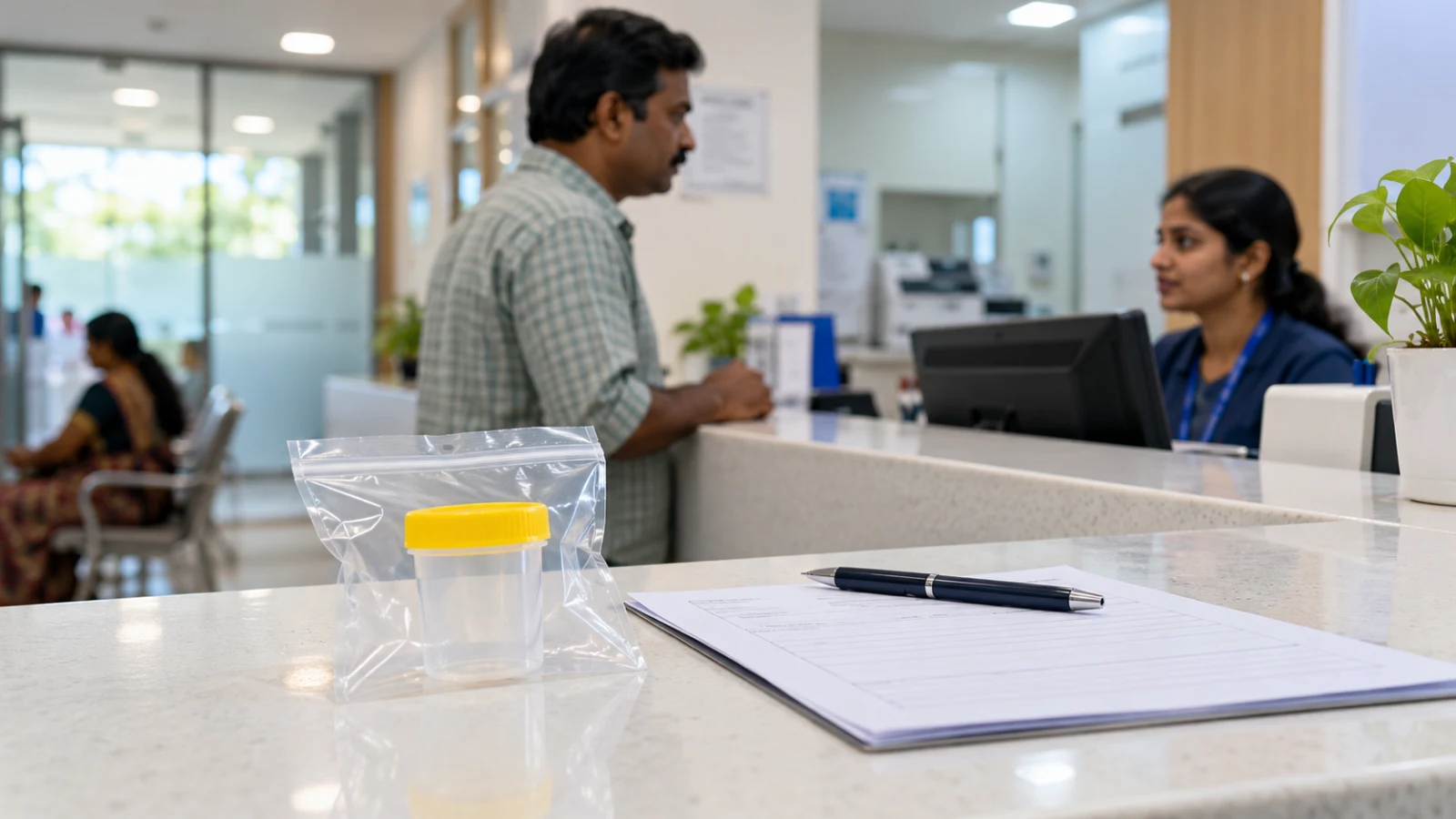
Ask about the container, collection method and delivery arrangements before collecting. If you have been given a container, use it as instructed. Do not assume a household bottle is suitable. Write down any timing instruction so the person collecting the sample and the person taking it to the laboratory have the same information.
If the instructions are unclear, a phone call is easier than repeating the collection. Tell the laboratory which test is on the form. Ask what to do if you cannot provide the preferred sample, rather than guessing and labelling a different sample as the requested one.
Explain what was happening around the collection
Exercise, fever and other temporary factors can affect urine albumin results. MedlinePlus advises checking preparation with the provider and explains why an abnormal result may need further tests. [3] Do not change prescribed medicines or create a restrictive diet unless the person ordering the test has instructed you to do so.
Tell the team about a recent illness, urinary symptoms or an unusually strenuous activity. The National Kidney Foundation also discusses temporary influences such as infection and the need to repeat a result where appropriate. [4] Context helps the clinician decide whether and when to collect another sample.
A short factual note is enough: when you were unwell, what symptoms you had and when the sample was taken. You do not need to decide which factor caused the result. That interpretation belongs with the rest of your clinical history and other investigations.
Read the units before comparing two reports
Laboratories may express a ratio using different units, such as mg/g or mg/mmol. A number copied without its unit can be misleading. Keep the original report or a clear photograph, including the laboratory reference information and collection date. Avoid comparing a cropped screenshot with a number remembered from an older appointment.
The clinician may also want to know whether the same type of test was repeated. "Protein in urine" is a broad description, not a precise test name. If the reports look different, ask the team to explain the comparison instead of trying to convert an unfamiliar result from a general internet chart.
A repeat request deserves a date and an explanation
An increased result may need confirmation; it is not a complete diagnosis by itself. [3] Ask why the repeat is being requested, how to prepare and when the team will discuss it. A request to repeat does not mean the first result should be ignored, and it does not by itself tell you that kidney failure has occurred.
Put the repeat on the same record as the original sample. If the clinician advises waiting until a temporary illness has resolved, write down the recommended timing. Do not turn that instruction into an open-ended delay because you feel well. Follow-up matters even when the test has no visible symptom attached to it.
Use the result in a wider diabetes review
Ask how the finding fits your glucose, blood pressure, other kidney results and current medicines. Bring the complete medicine list, including non-prescription products. Do not stop treatment, force extra fluids or start a supplement to change the report before it has been reviewed.
If the result prompts a new recommendation, ask what it is meant to achieve and which further checks are needed. A written next step makes the discussion easier to use at home. You should know who will review the next result and how to contact the team if the plan becomes difficult to follow.
For a person managing several appointments, keep the blood and urine reports together under a single date. A family member can help collect or file them if you want. They do not need to interpret the values for you; the useful task is making sure the right information reaches the right review.
Remember: uACR and eGFR provide different information. Keep the units, dates and clinical context with the results, and confirm any repeat-testing plan.
When to get help: Seek medical advice for new illness or concerning symptoms rather than waiting for a routine repeat sample. An unexpectedly abnormal report should be reviewed, not treated with a self-prescribed medicine or supplement.
Preparing for a uACR review
| Situation | A useful next step |
|---|---|
| The request says microalbumin or uACR | Confirm the exact test and sample instructions. |
| You were recently unwell | Tell the clinician when the illness and collection occurred. |
| Two reports use different units | Bring both full reports for interpretation. |
| The result is increased | Ask whether confirmation is needed and record the date. |
| Blood creatinine looked normal | Discuss it alongside the urine result rather than replacing it. |
Questions people ask
Is uACR the same as a routine urine test?
Not necessarily. It is a quantitative albumin-to-creatinine ratio. Check the test name on the request and report. A general statement about urine protein may refer to a different method or result.
Do I need to collect urine all day?
Routine uACR commonly uses a spot sample, and a first-morning sample may be preferred. Follow your laboratory instructions. If a 24-hour collection was specifically requested, ask why and use the instructions for that collection.
Does one high result prove kidney failure?
No. A result needs clinical interpretation and may need confirmation. It should not be ignored, but the number alone does not establish that conclusion. Review it together with eGFR, your history and any temporary factors.
Can exercise affect the result?
Strenuous activity can temporarily affect urine albumin. Ask the provider what preparation applies and mention recent exertion when the report is reviewed. Do not decide on your own that exercise explains an abnormal result and cancel follow-up.
Should I drink a lot of water before collecting?
Follow the collection advice rather than deliberately changing your usual intake to influence the result. Ask the laboratory if you are unsure. A uACR ratio helps account for urine concentration, but that does not replace proper collection instructions.
What should I ask when a repeat is ordered?
Ask when to collect it, what preparation is required and who will review the result. Keep the original report. If the repeat cannot be arranged as planned, contact the team so the follow-up does not simply disappear.
What to take away
Bring the whole urine report, the blood kidney result and the dates they were collected. Ask what the combination means and when the next action is due. That is more useful than interpreting one isolated number without its unit or context.
Discuss your diabetes care in Kannur
Bring your reports and everyday questions to MCR Diabetes & Eye Care. Contact the clinic to ask about a diabetes review and current appointment availability.
Enquire about an appointment →Related reading
Sources and further reading
- NIDDK: Assess Urine Albumin.
- NIDDK: Chronic Kidney Disease Tests and Diagnosis.
- MedlinePlus: Microalbumin Creatinine Ratio.
- National Kidney Foundation: Urine Albumin-Creatinine Ratio.
Sources checked on 30 October 2026. This article provides general education; your care team should tailor advice to your health and treatment. The AI-generated cover shows fictional people and settings.