MCR Diabetes & Eye Care · Kannur, Kerala
+91 97444 35552
Reading food labels with diabetes: look beyond the sugar line
A packet can say "no added sugar" on the front and still leave you unsure how it fits your diabetes meal plan. Turn it over. The portion information and carbohydrate line usually tell you more than the largest claim on the packaging. Once you know which quantity the numbers describe, comparing ordinary foods becomes less confusing.
Find the quantity before reading the nutrient numbers
Check whether the panel describes 100 grams, 100 millilitres, a stated serving or the whole pack. Two products may use different serving sizes, even when the packets look similar. Comparing the numbers without checking that heading can make one food appear lower in carbohydrate simply because its stated portion is smaller.
The FDA's guide to the US Nutrition Facts label explains the relationship between a serving, the number of servings in a container and the nutrient amounts. [1] Labels used in India and imported labels can look different. Read the panel in front of you rather than expecting every packet to follow a foreign layout.
Total carbohydrate and sugar answer different questions
Sugar is only part of the carbohydrate picture. A food can contain starch as well as sugar. Diabetes UK advises looking at total carbohydrate when considering blood glucose effects, rather than relying on the sugar figure alone. [2] That matters for foods such as crackers, cereal mixes and savoury snacks whose sweet taste tells you little about their carbohydrate content.
Find the carbohydrate line first, then read the sugar information beneath or alongside it. Do not add total sugars to total carbohydrate as though they were two separate totals. If a label uses unfamiliar terms, photograph the whole panel and ask the dietitian to explain it before using the number for a treatment calculation.
Understand what "no added sugar" does and does not say
Added sugars are distinct from sugars already present in ingredients such as fruit or milk. The FDA explains that total sugars include naturally occurring sugars and any added sugars. [3] A product without added sugar can therefore still contain sugar, carbohydrate and energy.
That claim does not decide whether the portion suits your plan. A sweetened and an unsweetened product may differ, but the comparison still needs the same quantity and the full panel. Avoid replacing one snack with an unlimited amount of another just because the second packet sounds more suitable.
Try one calculation with clearly stated numbers
Here is a made-up example to illustrate the arithmetic, not a real product recommendation. Suppose a label states 60 grams of carbohydrate per 100 grams of food. If you eat 30 grams of that food, it contains 18 grams of carbohydrate: 60 multiplied by 30, divided by 100.
Now imagine a different packet gives a carbohydrate amount for a 15-gram serving. If you usually eat twice that serving, you need to account for twice the labelled amount. A serving printed by the manufacturer describes a quantity; it is not automatically your prescribed portion.
The CDC explains that carbohydrate counting uses the amount eaten and that a labelled serving can differ from a person's idea of a serving. [4] If this arithmetic is part of your insulin plan, learn the method with your diabetes team. This article does not provide an insulin-to-carbohydrate ratio or a dose calculation.
Compare foods you would actually use in the same way
Put two cereal packets side by side and compare the same amount. Then consider how much you would realistically prepare. A lower figure per 100 grams may be less useful if the portion you eat is much larger. A photograph of the usual bowl can help make that conversation concrete.
Also check what is added during preparation. Milk, a banana, sweetened tea or another accompaniment belongs to the meal even when it does not appear in the packet's nutrition panel. A dry mix and the finished breakfast are different descriptions. Look for instructions saying whether the numbers refer to the dry or prepared product.
Read the ingredients and the rest of the panel
The nutrition discussion is wider than glucose alone. Ingredients, fibre, fats and salt may matter to the overall eating plan. Diabetes UK's label guidance encourages using the back-of-pack information rather than relying only on front-of-pack signals. [2] Your kidney, blood pressure or other care plan may add questions that a general carbohydrate comparison cannot answer.
There is no need to find one perfect packet that wins on every number. Compare a few foods you buy often and work out which choice and portion fit your needs. If you are spending much more because a food is marketed for diabetes, ask whether an ordinary alternative would do the same job in your meals.
Make label reading easier in a real shop
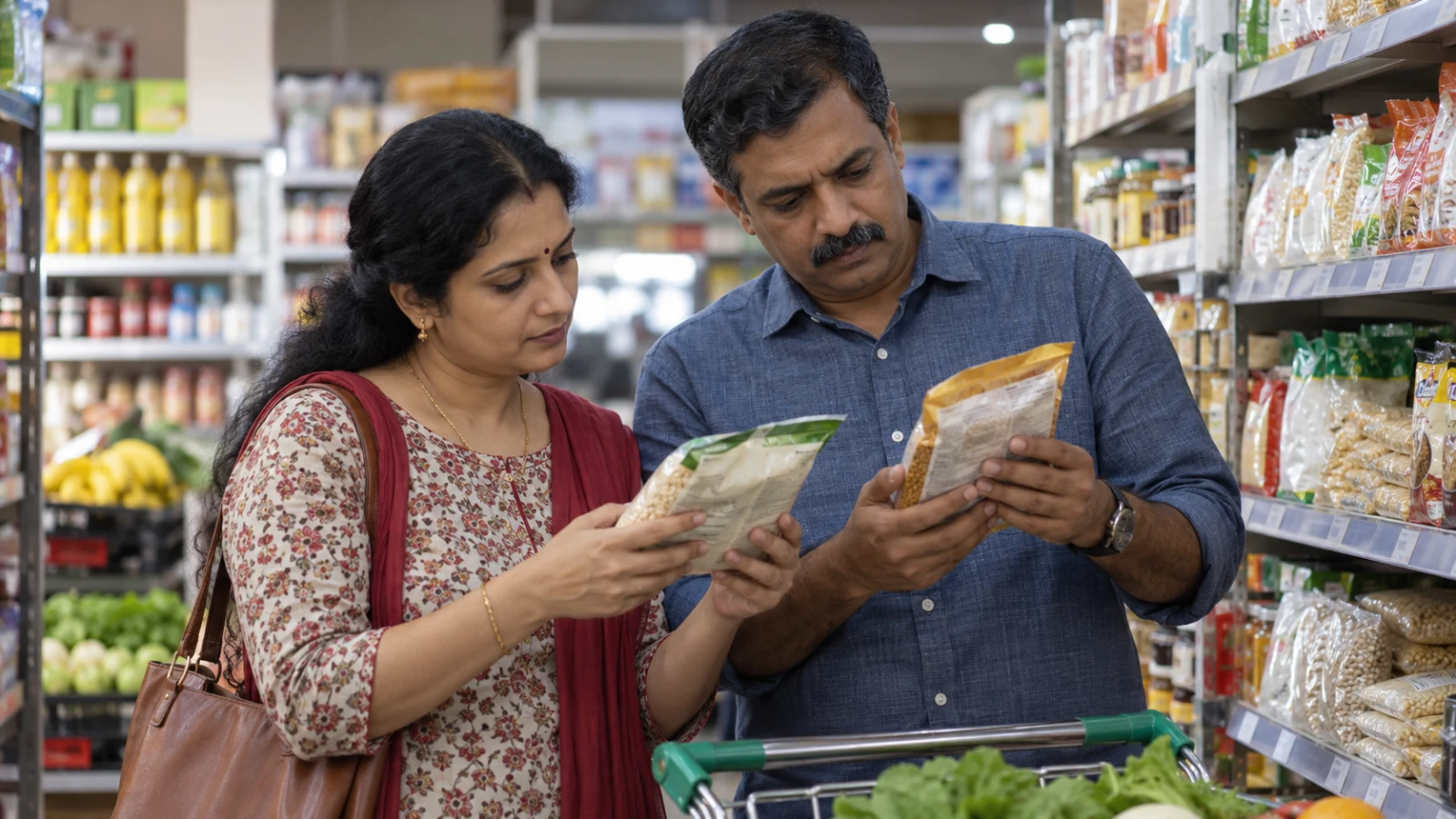
Small print and a busy aisle are a poor setting for learning the whole method. Start with an empty packet at home, where you can read the headings without rushing. You might keep a photograph of a familiar product's panel on your phone to discuss at the next appointment.
If somebody else shops for you, explain the specific comparison you want. "Check this serving size and carbohydrate amount" gives them more help than "buy something healthy". When the package changes, check the information again rather than assuming the product name guarantees the same contents.
Know when not to improvise
Do not subtract fibre or sugar alcohols according to a rule copied from an overseas label or an online discussion. Definitions and calculation methods can vary. If carbohydrate counting guides your medicine, ask the care team which line and method to use for the products you buy.
Bring the packet when the numbers do not seem to match the food. Include the serving instructions and ingredient list in a photograph, not just the large claim on the front. A clear example makes it easier to correct a misunderstanding without turning every shopping trip into a nutrition examination.
Remember: A front-of-pack sugar claim does not replace the carbohydrate amount and serving information. Compare like quantities, then account for the portion you actually eat.
When to get help: If food calculations are part of insulin dosing, follow the method your diabetes team has taught you. Do not change a dose or use a new subtraction rule from this article.
A quick back-of-pack reading order
| Situation | A useful next step |
|---|---|
| Quantity heading | Is the information per 100 g, per serving or per pack? |
| Total carbohydrate | Which amount applies to the portion I will eat? |
| Sugar information | Does the claim describe added sugar, total sugar or something else? |
| Prepared food | What milk, fruit or other ingredients will I add? |
| A comparison | Am I comparing the same amount of both products? |
Questions people ask
Does sugar-free mean carbohydrate-free?
No. The food may still contain carbohydrate from other ingredients. Read the full panel and consider the portion. A claim about sugar is not a substitute for the information your diabetes plan uses.
Should I add sugars to total carbohydrate?
Do not treat them as separate amounts to add together. Sugar is part of the carbohydrate information. If a particular panel is confusing, ask your dietitian to show you how to read that exact label.
Is the printed serving my recommended portion?
Not necessarily. It is the amount used for the panel. Your meal plan may use a different quantity, so check how much you normally eat and discuss what is appropriate for you.
Do I need foods labelled for diabetes?
The label alone does not establish that a product is needed. Compare its ingredients, nutrient information, portion and cost with ordinary options you enjoy. Ask the dietitian about the foods you already buy.
Can I compare a 100-gram value with a serving value?
First put both on the same basis. Otherwise a smaller stated serving may look better even when the foods are similar. Use a clear worked example with your care team if the arithmetic is unfamiliar.
Why do imported packets look different?
Countries use different label formats and conventions. Read the headings and quantity on the actual pack. Do not assume that a foreign traffic-light display, percentage or fibre calculation is an instruction tailored to your diabetes care.
What to take away
Choose one food you buy regularly and practise reading its full panel. Find the quantity, read total carbohydrate and relate it to your portion. That small skill is more useful than collecting a list of approved brand names.
Discuss your diabetes care in Kannur
Bring your reports and everyday questions to MCR Diabetes & Eye Care. Contact the clinic to ask about a diabetes review and current appointment availability.
Enquire about an appointment →Related reading
- Hidden sugar and everyday food choices
- Industrial starch in packaged foods
- Sugar substitutes explained
Sources and further reading
- FDA: How to Understand and Use the Nutrition Facts Label.
- Diabetes UK: Understanding Food Labels.
- FDA: Added Sugars on the Nutrition Facts Label.
- CDC: Carb Counting.
Sources checked on 30 October 2026. This article provides general education; your care team should tailor advice to your health and treatment. The AI-generated cover shows fictional people and settings.