MCR Diabetes & Eye Care · Kannur, Kerala
+91 97444 35552
Fruit with diabetes: whole fruit, juice and everyday portions
A fruit bowl can become a source of unnecessary argument after a diabetes diagnosis. One person says bananas are forbidden; another recommends a large glass of fresh juice because it has no added sugar. The more useful conversation is about the fruit itself, the amount you eat and how it fits the rest of your meals.
Fruit does not need a blanket ban
Fruit contains carbohydrate and can fit into a diabetes eating plan. The American Diabetes Association includes fresh, frozen and canned fruit without added sugars among suitable choices. Portion and preparation still matter. A whole fruit, a bowl of cut fruit and a handful of dried fruit are not interchangeable measures. [1]
Tell your dietitian which fruits you enjoy and buy regularly. Papaya from home, a banana packed for work and an orange bought at a shop all belong in the discussion. A plan is easier to follow when it uses food you can obtain, rather than an expensive list that changes the household shopping.
Choose an amount before you start eating
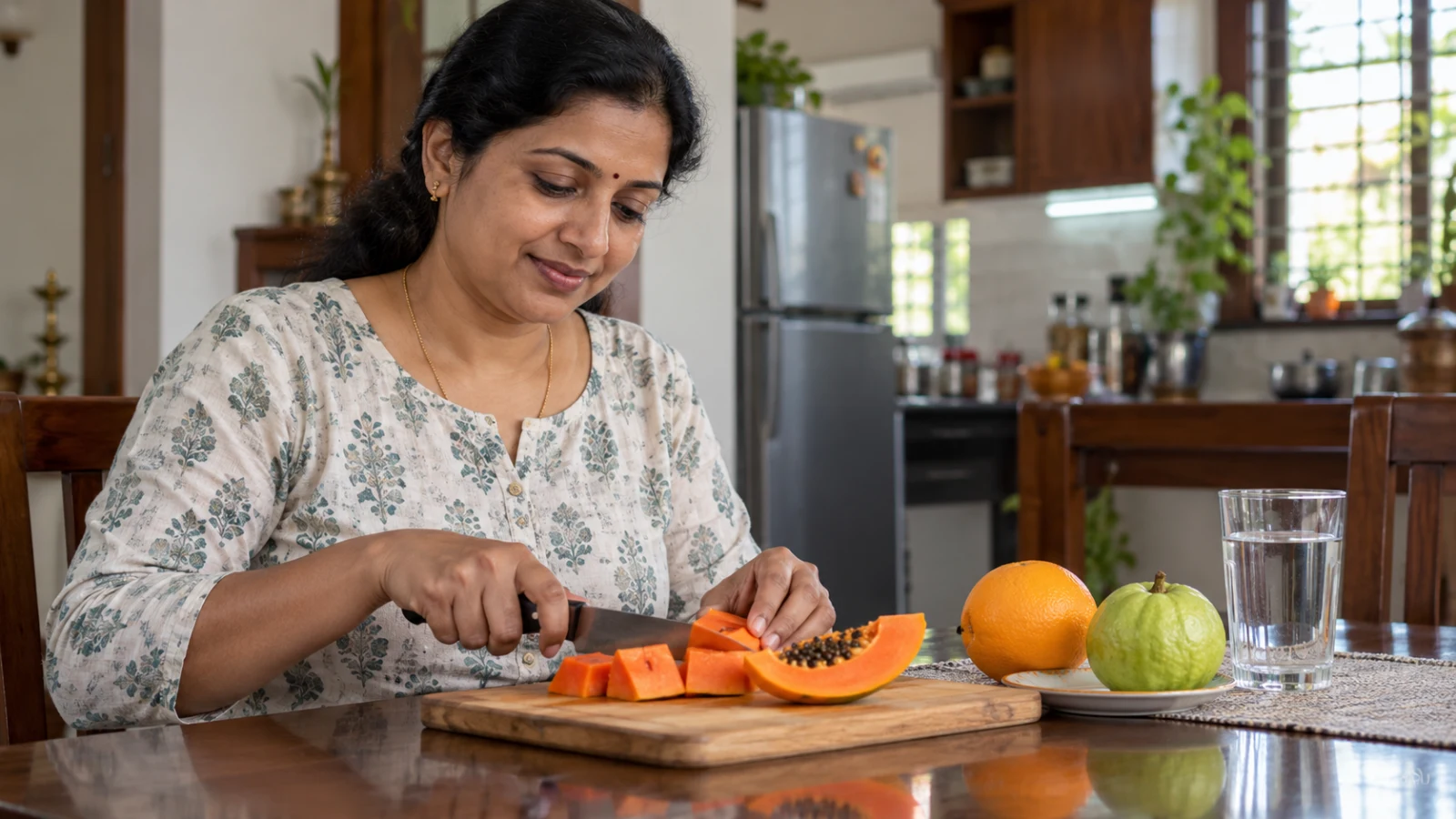
Serve the portion you intend to eat instead of keeping a large bowl beside you while you work or watch television. Notice the size of the fruit and whether you are eating it alone or with another meal. A photograph can help explain what "one piece" or "one bowl" means in your home.
There is no need to turn every piece of fruit into a calculation if your care plan does not require carbohydrate counting. Ask how to recognise the portion agreed for you. Someone using meal-time insulin may need more detailed instruction than someone following a different treatment plan.
Juice is easier to drink in a large amount
Diabetes UK explains that juice and smoothies differ from whole fruit and recommends choosing whole fruit more often. A drink can contain fruit from several pieces while being consumed quickly. "Fresh" and "no added sugar" do not mean that its natural sugars have disappeared. [2]
Think about the glass used at home or the size sold at a juice counter. You may not know how much fruit went into it, and extra ingredients may be added. If you want juice, discuss a defined amount rather than treating the drink as unlimited because it was prepared in front of you.
Water is a straightforward drink alongside a meal or a fruit portion. You do not need juice to make a fruit snack complete. Whole fruit also gives you something to chew, which is a practical difference when a drink would be finished before you had noticed the amount.
Different fruit forms need different questions
Cut fruit and fruit salad
Check what is added as well as what is cut. A fruit salad may include sweetened yoghurt, syrup, ice cream or another topping. Describe the full dish when discussing it. The label "fruit salad" does not tell the clinician the ingredients or the serving.
Dried fruit
Dried fruit is concentrated into a small volume, so an amount that looks modest can contain more carbohydrate than expected. [1] If you enjoy raisins or dates, bring the actual packet or a photograph of your usual handful. Do not assume that a handful of each type is the same portion.
Canned fruit
Look at the packing liquid and ingredient information. NHS guidance recommends canned fruit in natural juice or water without added sugar as a general choice. [3] Check whether you eat the liquid too, and consider the amount served rather than only the total weight printed on the tin.
Put fruit into the day you already have
Some people add fruit to breakfast, others carry it to work or eat it after lunch. Tell your dietitian the pattern rather than asking for a universal "best time". A fruit portion can be part of an eating plan, but adding it on top of every meal without considering the overall intake is a different change.
If you usually skip a meal and later eat several pieces at once, explain that routine. The difficulty may be meal access, a long commute or a medicine schedule that needs attention. A list ranking individual fruits will not solve a workday in which you cannot get a proper lunch.
Avoid judging a food by one glucose result
Diabetes UK's dietary advice emphasises that the amount of carbohydrate matters and that people need individual plans. [4] If your team asks you to check readings around food, follow the agreed timing and note the amount, the other food and the circumstances.
A result after a fruit snack might also sit alongside a late meal, illness, activity or a treatment change. Bring a repeated concern to review. Do not take extra tablets or remove several food groups because of a single reading. The purpose of recording is to answer a question with your care team.
Make the plan work for shopping and family meals
You do not need to buy one special fruit for the person with diabetes and another for everyone else. Ask how familiar choices can fit, and agree a serving method that the person preparing food understands. When the fruit changes with the season or price, the plan should still make sense.
For a person who depends on someone else to shop, write down preferences as well as any specific advice. A vague instruction to buy "diabetic fruit" can lead to unnecessary expense and confusion. Take a packet, a photograph or a familiar fruit to the consultation if the words are getting in the way.
Kidney disease, pregnancy and other medical circumstances can require additional dietary advice. Explain those conditions before following a general fruit list. A useful meal discussion considers the person eating the food, not just whether a particular fruit has a favourable reputation online.
Remember: A food can contain natural sugar and still fit a diabetes meal plan. The form, amount and overall meal pattern are more useful than a permanent good-fruit/bad-fruit list.
When to get help: Do not use ordinary fruit portions as a substitute for your prescribed low-glucose treatment. If you cannot swallow safely or become seriously unwell, seek urgent help according to your care plan.
Questions to ask about a fruit serving
| Situation | A useful next step |
|---|---|
| Whole fruit | What amount fits my meal or snack? |
| Fresh juice or a smoothie | How much fruit and what additions are in the glass? |
| Dried fruit | What does my usual handful contain? |
| Canned fruit | What is the packing liquid and how much am I serving? |
| Fruit with another meal | How does it fit the complete meal plan? |
Questions people ask
Can I eat bananas if I have diabetes?
A blanket ban is not the usual starting point. Discuss the size and amount you eat and the rest of your meals. The plan may need adjustment for your treatment or other health conditions, rather than for the name of the fruit alone.
Is homemade juice free of sugar?
No. Not adding sugar does not remove the sugars already in the fruit. The amount used and the size of the glass matter. Whole fruit is generally a more useful everyday choice, with juice discussed as a defined portion if you want it.
Is there one best fruit for blood sugar?
A universal ranking is less useful than a portion and routine you can follow. Explain your usual choices and budget. You do not need to buy a costly imported fruit simply because it appears on an online diabetes list.
Can I eat fruit immediately after lunch?
Ask how it fits the full meal rather than looking for one compulsory time. Include it when discussing the carbohydrate and total amount you eat. Your medicine routine and preferences also belong in that conversation.
Should I avoid all dried fruit?
It needs attention to portion because a small volume can be concentrated. Bring the packet or show your usual amount to the dietitian. Avoid treating it as unlimited, but do not impose a restriction solely because someone called it forbidden.
What if my kidney plan restricts certain foods?
Follow the advice tailored to your kidney condition and ask your team to review the fruit choices within it. A general diabetes article cannot settle additional restrictions or replace an individual assessment of your reports and treatment.
What to take away
Keep the fruit you enjoy in the conversation. Agree how to serve it, distinguish whole fruit from a drink, and bring any repeated monitoring concern to review. The aim is an ordinary eating routine your household can maintain.
Discuss your diabetes care in Kannur
Bring your reports and everyday questions to MCR Diabetes & Eye Care. Contact the clinic to ask about a diabetes review and current appointment availability.
Enquire about an appointment →Related reading
Sources and further reading
- ADA: Fruit and Diabetes.
- Diabetes UK: Fruit Juices and Smoothies.
- NHS: 5 A Day, What Counts.
- Diabetes UK: Food, Drink and Diabetes Questions.
Sources checked on 30 October 2026. This article provides general education; your care team should tailor advice to your health and treatment. The AI-generated cover shows fictional people and settings.