MCR Diabetes & Eye Care · Kannur, Kerala
+91 97444 35552
Rice portions with diabetes: measuring what goes on your plate
"Eat less rice" is hard to use when nobody has explained what your current serving looks like. One household serves rice with a small cup; another uses a large ladle and adds a second helping. Before changing the rice variety or buying a special product, make the portion on your own plate easier to describe.
Describe your usual lunch before changing it
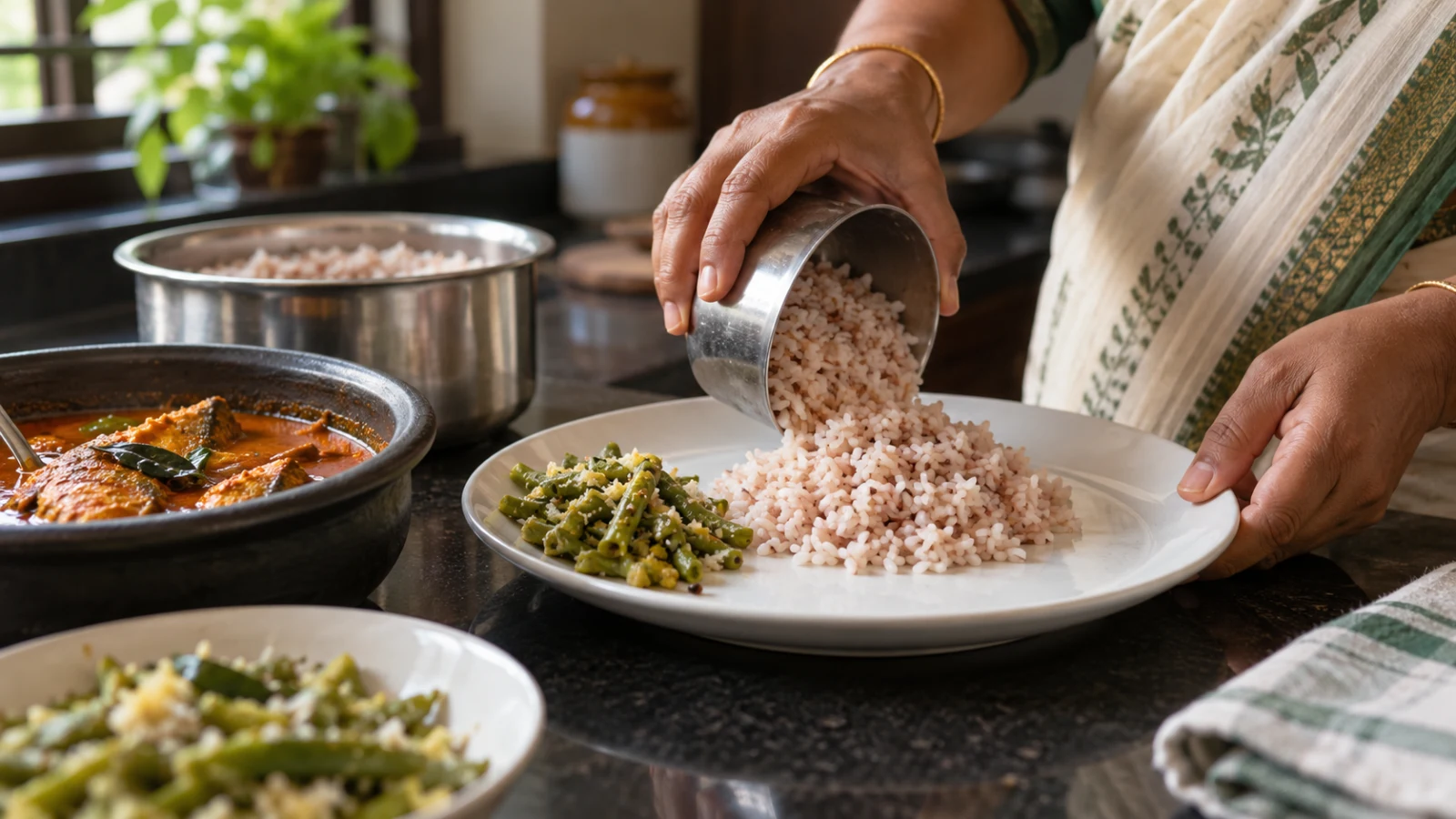
Serve an ordinary meal on the plate you normally use. Notice how many level or heaped spoonfuls you add and whether you usually go back for more. A photograph can help a dietitian understand the serving. Include the accompaniments and drink in the picture rather than photographing only the rice.
You are gathering useful information, not creating a test of willpower. If a weekend serving is larger than a workday lunch, mention both. A plan built around a carefully staged plate is difficult to follow when the household returns to its normal routine.
Cooked rice and raw rice are different measurements
Rice takes up water during cooking. A weight printed for dry rice cannot simply be applied to the same weight after cooking. Diabetes UK's carb-counting guidance specifically warns readers to check whether the values they use refer to raw or cooked food. [1]
If you use a food label, database or app, check the description before entering a quantity. Keep the rice variety and preparation method consistent when you compare portions. Do not assume that two entries with the word "rice" describe the same food. Ask for help if the source is unclear about its measurement.
A kitchen scale may help some people learn their usual serving, but everyone does not need to weigh every meal indefinitely. A dietitian can help you connect a familiar cup or spoon to the method used in your plan. Cup-based carbohydrate education is one approach used by diabetes services; it still depends on the food and the measure being defined. [2]
Find a serving method your household can repeat
Choose a utensil that is already in the kitchen. Tell the person helping you plan meals whether you fill it level, heap it or press the rice down. If someone else serves lunch, include them in the explanation. A note saying "one cup" is not enough if the family uses several different cups.
Once you have an agreed portion, try serving it before taking the plate to the table. If serving dishes stay beside you, an extra spoonful can become part of the meal without being noticed. This is an organisational suggestion, not a fixed portion recommendation for every reader.
Look at the curry, vegetables and everything alongside the rice
The CDC's plate method includes non-starchy vegetables, a protein food and a portion of carbohydrate food. It is a way to discuss meal balance rather than a calculation that suits every person. Beans and other pulses can contribute carbohydrate as well as protein, so the complete combination still matters. [3]
For a Kerala lunch, describe the rice together with fish, egg, pulses, vegetable dishes, curd or other accompaniments you actually eat. Mention any additional starchy food. A meal with a modest rice serving can still contain a substantial amount of carbohydrate elsewhere.
Bring the eating situation into the conversation. A banana-leaf meal, a restaurant thali and a packed lunch do not have identical serving arrangements. Ask how to make a practical choice in each setting instead of assuming the home plate is the only meal you will ever eat.
Does changing to matta or brown rice settle the question?
A different grain can change a meal's composition, but it does not make portion size irrelevant. General diabetes dietary guidance still considers the amount of starchy food and the rest of the diet. [4] Avoid treating a colour, an unpolished label or a higher price as permission for an unlimited serving.
If you prefer matta rice, tell the dietitian. There is no need to pretend you enjoy a substitute that nobody at home wants to cook. Ask whether your familiar rice can fit the plan and what serving method would make the advice clearer. The same conversation should cover availability and cost.
Use glucose monitoring to answer a defined question
If your team recommends checks around meals, ask when to check and which target applies. Record the serving, meal time, medicine timing and any unusual activity. Compare ordinary days rather than trying to make one meal prove that a rice variety is suitable or unsuitable forever.
A single result cannot separate the effects of the serving, a delayed meal, illness or another change that day. Keep the record short enough to maintain and bring repeated concerns to review. Do not add medicine or skip the next meal to compensate for a number on the screen.
Plan for meals where measuring is awkward
At a restaurant, you may not know the recipe or have a measuring cup. Use the serving method you have discussed with your dietitian as a practical reference. You can photograph the plate if that helps with a later review. You do not need to calculate an exact carbohydrate figure from an unfamiliar dish by guesswork.
For a packed lunch, choose the box and serving utensil together. A deep compartment can hide a larger rice portion than a shallow plate. Describe how full you normally pack it, and discuss what will happen if your lunch break is delayed. Food planning needs to fit treatment and working hours.
Bring one concrete example to your next appointment
Instead of asking only "Is rice allowed?", you could ask: "This is my usual cooked serving, with these curries. How would you adjust it for my plan?" Bring the photograph or utensil description. A clear example gives the dietitian enough context to explain an adjustment you can repeat at home.
Remember: This guide does not set a universal rice allowance or calculate a glycaemic index for a household recipe. It helps you describe the portion used in your own meal plan.
When to get help: Large changes in food intake may need a treatment review, particularly with insulin or medicines that can cause lows. Follow your agreed plan if readings become concerning.
Common rice-portion mix-ups
| Situation | A useful next step |
|---|---|
| The label gives raw weight | Check the food description before using a cooked weight. |
| The household uses several cups | Name the utensil and how it is filled. |
| A lunch box looks smaller than a plate | Compare the actual serving, including extra helpings. |
| A new rice variety seems healthier | Review its portion and the rest of the meal. |
| A reading after lunch is unexpected | Record the circumstances and discuss repeated patterns. |
Questions people ask
How much cooked rice can I eat with diabetes?
There is no single amount for everyone. Your needs, treatment, activity and the rest of the meal affect the plan. Bring a description of your normal cooked portion so the dietitian can give advice you can actually use.
Is matta rice unlimited because it is less polished?
No rice variety makes the amount irrelevant. Discuss the serving and accompaniments together. You can keep your preference in the conversation without assuming that the same number of spoonfuls is right for every person.
Must I buy a kitchen scale?
Not necessarily. Some people find a scale useful while learning; others use a clearly defined cup or spoon with professional guidance. The aim is a repeatable method, not extra equipment that makes meals harder to manage.
Can I use a raw-rice value for cooked rice?
Not directly. Check whether the nutrition information describes dry rice, cooked rice or a prepared recipe. If the source does not say, use a clearer source with your dietitian rather than entering a guessed value.
What if another family member serves my lunch?
Include them when the portion is explained. A photograph or a note about the usual serving cup can help. Ask them to check with you before adding a second helping rather than changing the entire family menu.
Should I stop rice after one high reading?
Take the result in context and follow your care plan. Record the meal and other circumstances, then discuss repeated concerns. Do not make a sudden restrictive diet or treatment change solely from one meal reading.
What to take away
Begin with the plate you eat from, the utensil you serve with and the meal your household already cooks. A rice portion you can describe clearly is easier to adjust than an instruction to eat "a little less".
Discuss your diabetes care in Kannur
Bring your reports and everyday questions to MCR Diabetes & Eye Care. Contact the clinic to ask about a diabetes review and current appointment availability.
Enquire about an appointment →Related reading
Sources and further reading
- Diabetes UK: Learn About Carb Counting.
- UCLH: Carbohydrate Counting Using Cup Measures.
- CDC: Diabetes Meal Planning.
- Cambridge University Hospitals: Healthy Eating in Diabetes.
Sources checked on 30 October 2026. This article provides general education; your care team should tailor advice to your health and treatment. The AI-generated cover shows fictional people and settings.