MCR Diabetes & Eye Care · Kannur, Kerala
+91 97444 35552
Travelling With Diabetes: A Checklist for Kerala Journeys and Beyond
A train delay can push lunch back; a flight or day trip can change when you walk or take medicine. Start your diabetes travel plan with those possibilities, the time in transit and access to supplies. A perfect travel menu will not help much if the kit is out of reach.
When travelling from Kannur or elsewhere in Kerala, think about heat and humidity while packing. You still need a plan if the destination is cooler or you cross time zones.
Pack the supplies you may need in transit
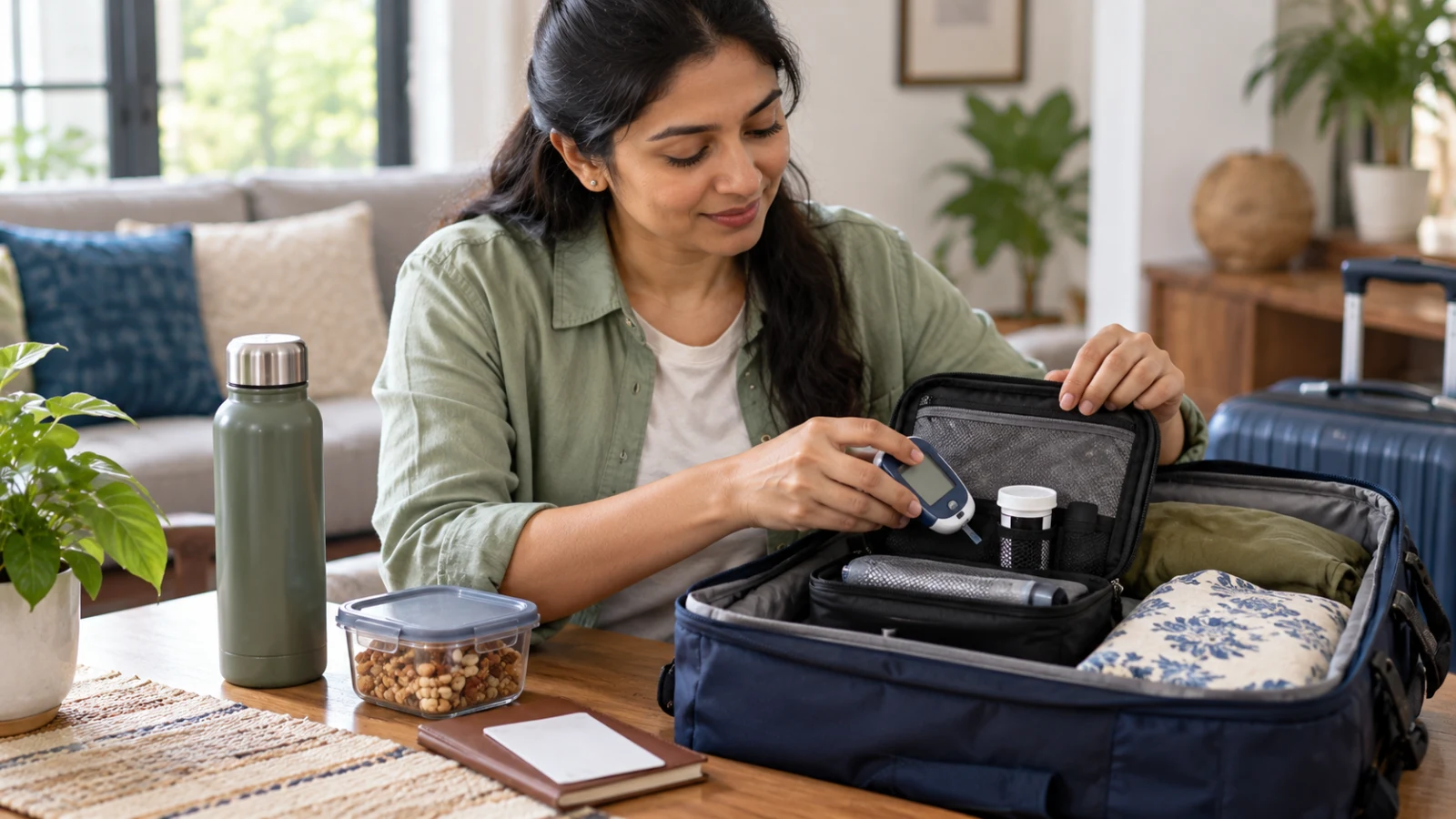
Keep medicines, your monitoring kit and low-glucose treatment within reach during the journey. Carry a prescription or medicine list, and ask your clinician how many supplies to allow for reasonable delays. Essential items locked in luggage may be difficult to reach when needed.
The CDC recommends planning food, medicines and device storage ahead of travel. [1] Ask about documents for injections and sharps, then check current transport or airline rules. Diabetes guidance does not replace the carrier's security requirements.
Protect medicines and equipment from heat
Parked cars, direct sunlight and exposed bags may not provide suitable storage. Check the instructions for each product: insulin, strips, meters and sensors can have different conditions. Some rules change after opening.
Keep insulin from touching ice or a frozen gel pack directly. The CDC advises protecting medicines from excessive heat and cold and leaving supplies out of hot cars. [2] An insulated pouch may help, but does not prove its contents stayed at the right temperature.
Plan for the meal that arrives late
If your medicines can cause lows, ask about meal delays before you leave. Carry the specific fast-acting treatment in your plan separately from ordinary snacks, so you know which to use. A planned snack does not automatically treat a low.
Carry water and check where food will be available. Follow your own fluid advice if you have a restriction. Tell a companion where the kit is and how to get help. When travelling alone, an accessible medical information card may help communicate your needs.
Ask about time zones and security checks
Ask about medicine timing for a long journey, especially if you use insulin. Get the agreed times in writing, clearly identifying departure, destination and local clock changes. A timetable from social media may have been written for a different journey or medicine.
Check your pump or CGM manufacturer's instructions for airport screening and medical imaging; the rules differ between devices. Take backup glucose-testing supplies and anything else the team recommends if a sensor fails while away.
Use travel readings in context
More activity, delayed meals, illness or an unfamiliar routine may change readings. Note the circumstances and use your care plan's action limits. The American Heart Association encourages discussion of practical barriers and questions with the diabetes team. [3]
Save care-team contacts and work out how to obtain urgent care at your destination before departure. Chest pain, severe breathlessness, confusion or severe low-glucose symptoms require urgent assessment. Get help where you are rather than waiting because you are away.
Key fact: Travel preparation should cover the hours in transit as well as the destination. Accessible supplies and a written plan are more useful than a packed kit you cannot reach.
Plan each part of the journey
Plan departure, transit and arrival separately. A short flight may still mean hours at an airport; a train delay may mean a late meal. On a road trip, decide who will keep supplies out of the parked car.
Before leaving home
Check what is actually in the bag: medicine names, amounts, expiry dates and device supplies. Add a readable prescription or list. If a companion carries some items, agree which essentials will stay with you during transit.
While in transit
Leave essential supplies where you can get them without opening a locked suitcase. Check food and water access and make a backup plan for delays. Use the meal-delay instructions given for your medicines.
At the destination
At arrival, check storage and where you could get medical help. A hotel fridge or insulated pouch may not meet every product's instructions. Keep the packaging information so you can ask about the medicine you have.
Check storage for your insulin product
Heat or freezing can reduce insulin's effectiveness. The FDA's emergency advice distinguishes normal labelled storage from exceptional circumstances. [4] Check your product's routine instructions rather than treating an emergency allowance as a travel rule.
If insulin may have been stored incorrectly, ask a clinician or pharmacist what to do. Do not increase a dose because you suspect it is less effective. Before travelling, consider how to obtain backup supplies if your usual product would be hard to find.
Use a cooling pouch so insulin stays apart from ice or frozen packs. Check permitted storage for strips and devices too; the same arrangement may not suit everything in the kit.
Agree timing for delays and time zones
Tell the team the departure time, duration, destination and chance of a missed meal. For medicines affected by time zones, ask for a written schedule identifying the clock to follow. "Usual time" can be unclear when the clocks differ.
Pack the advised low-glucose treatment where you can distinguish it from ordinary food. A convenient snack may not act like the rapid treatment in your plan. Take it with you rather than relying on finding it at the next stop.
Ask specifically about driving with your treatment and risk of lows. If you feel low or unwell, stop safely and follow the plan, even when nearly there. CDC travel guidance covers arranging meals, monitoring and medicine access during the journey.
What to put on a medical information card
Consider a card with your diagnosis, medicine names, allergies, relevant conditions and an emergency contact. Ask which details would help in urgent care. You need not carry information publicly that you are uncomfortable sharing.
When asking for help, describe symptoms and readings with times and units. Say which medicines you use and what you have done under the plan. "The numbers are not normal" is harder for someone to assess.
Keep sick-day instructions with the kit. NIDDK includes planning for special situations in diabetes management. [5] Prepare for illness as well as for days when the journey goes to plan.
Important: Do not change doses because a medicine may have overheated, and do not keep driving when you feel low or unwell. Follow urgent advice and obtain help where you are.
Preparing for travel
| Area | What to Remember |
|---|---|
| Carry-on essentials | Keep medicines, monitoring and low treatment accessible. |
| Heat and cold | Follow each product's labelled storage conditions. |
| Meal delays | Use a plan matched to the medicines you take. |
| Time zones | Obtain an itinerary-specific written schedule. |
| Illness away | Know local urgent-care access and keep the sick-day plan. |
Common questions
Can I leave insulin in the car during a short stop?
Plan to take it with you and follow its storage instructions. A parked car can reach unsuitable conditions even during a brief stop; the length of the stop does not establish a safe temperature.
Should an insulin pen touch an ice pack?
Do not put insulin directly against ice or a frozen pack. Use the storage arrangement recommended for the product and journey. If you are uncertain whether the medicine froze or overheated, ask a clinician or pharmacist rather than guessing.
Do all sensors use the same airport screening rules?
No. Look up the instructions for your exact pump or CGM and the current security rules. An article cannot confirm every device is suitable for every scanner. Bring backup monitoring supplies as advised.
How should I handle a time-zone change?
Take your itinerary to the prescribing team, particularly if you use insulin. Get a written timetable that names the clock you should follow. A schedule for another medicine or journey may not apply.
What if my meal is delayed on a train?
Follow the meal-delay advice given for your medicines and carry the recommended backup food and low-glucose treatment. Ask about this before departure. Do not assume that moving or doubling a dose is safe for your particular treatment.
Does a good reading mean I can ignore illness while travelling?
No. Symptoms, hydration and your sick-day instructions still matter. Seek urgent assessment for serious symptoms rather than waiting to return home. A familiar glucose value does not rule out every urgent medical problem.
Check the plan before departure
Before departure, clarify medicine timing and how to handle delays. Protect medicines from unsuitable temperatures and keep the kit, low-glucose treatment and contacts within reach. Check that the instructions still make sense if a meal or connection is late.
Discuss travel preparations in Kannur
Contact MCR Diabetes & Eye Care for appointment enquiries and current availability. Bring your itinerary, medicines and monitoring questions to discuss preparations for travel.
Enquire About an Appointment →Related reading
- Insulin Therapy: Using and Storing Your Medicines
- Blood Sugar Testing at Home: Methods and Monitoring
Sources and further reading
- CDC: Tips for Traveling With Diabetes.
- CDC: Managing Diabetes in the Heat.
- American Heart Association: Working With Your Diabetes Healthcare Team.
- FDA: Insulin Storage in an Emergency.
- NIDDK: Managing Diabetes.
Sources checked on 30 October 2026. General educational information; individual care should be planned with your diabetes team. Cover image generated with AI for editorial use; people and settings are fictional.