MCR Diabetes & Eye Care · Kannur, Kerala
+91 97444 35552
Puttu, Appam or Idli? Planning a Kerala Breakfast With Diabetes
After a diabetes diagnosis, you may wonder whether puttu, appam or idli still belongs at breakfast. Start with the whole meal: its portion, accompaniments and how it fits your medicines and routine. All three dishes contribute carbohydrate. Steaming, fermentation or home cooking does not make the portion unlimited.
These Kerala meal examples use general meal-planning advice. Take them to a dietitian for discussion; they are neither a prescribed menu nor a tested glycaemic ranking of the recipes.
Count the meal, not only the main dish
Starches and sugars contribute to blood glucose, and carbohydrate needs vary between people. [1] At breakfast, the main dish may be only one source. A banana, milk, sweetened tea or sugary accompaniment adds to it.
Portions and recipes vary. Two small homemade idlis are different from two large restaurant ones. A photograph using your usual plate or serving spoon can help a dietitian understand what "two pieces" means for you.
Ways to plan familiar breakfasts
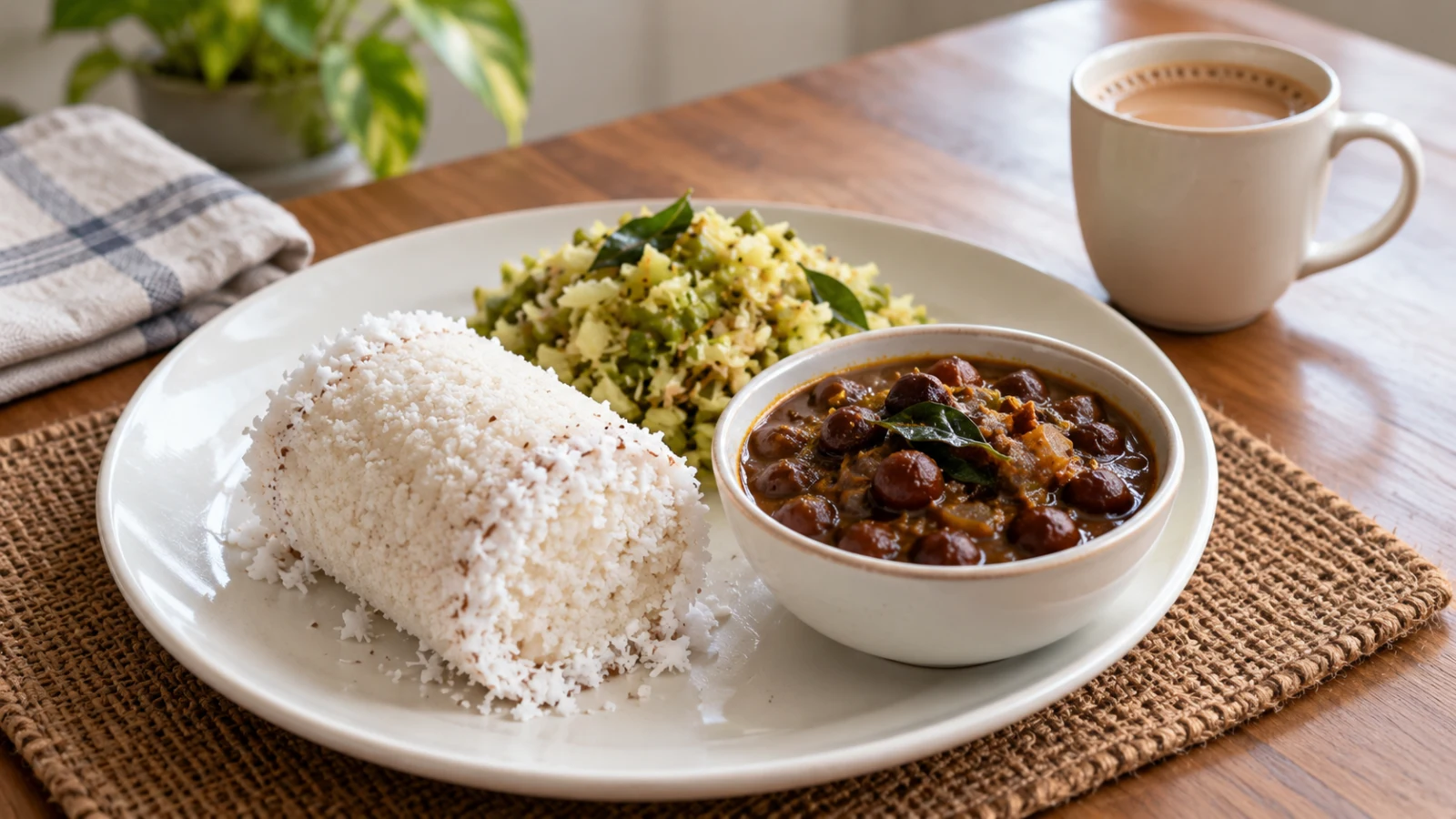
- Puttu: discuss the portion of puttu alongside kadala curry. Chickpeas provide protein and fibre, but they also contain carbohydrate; the curry is not a free addition.
- Appam: consider the number and size of appams as well as what is in the stew. An egg or suitable protein accompaniment and vegetables can help create a more varied meal.
- Idli: discuss idli size and number, plus a vegetable-rich sambar. A large bowl of chutney or an extra serving is still part of the meal.
These are ways to include vegetables and protein alongside carbohydrate, as described in the CDC's meal-planning guidance. [2] They do not tell you an exact carbohydrate allowance.
Make the easiest change first
If you have sweet tea and a sweet accompaniment at breakfast, ask whether changing the drink would be a useful first step. Water or unsweetened tea or coffee are practical options. Changing the drink, portions, ingredients and timing all at once makes it harder to tell what helped.
Millet and wholegrain versions can offer variety. Still check the ingredients, portion and what else you eat with them. The words on the label, including "for diabetes", do not settle whether the meal suits you.
Give monitoring a clear purpose
If your clinician asks for meal-related checks, agree when to test and which target to use. Record the food and rough portion, along with medicine timing and activity. A repeated pattern is worth discussing; one reading is a poor reason to ban a favourite food.
Follow your prescribed medicines rather than skipping a dose, taking extra tablets or missing the next meal to compensate for a reading. Changes in food intake need particular care with insulin or medicines that cause lows. The NHS advises getting professional guidance before a very restrictive diet. [3]
Build a breakfast you can repeat
Tell the dietitian what mornings are like: a school run, shifts, tea-shop breakfast or cooking for a large family. The plan needs to be affordable and workable on weekdays, when there may be little time for a separate menu.
Key fact: These Kerala meal examples apply general nutrition principles. They are not measured glycaemic-index comparisons, exact carbohydrate calculations or personalised diet prescriptions.
Why the dish name does not settle the portion
Households use different amounts of flour, appam pans and idli moulds. Accompaniments vary too. Calling a dish "good" or "bad" leaves out much of what determines the meal you eat.
Show the plate or serving utensil you normally use. If you eat out, a photograph of one breakfast can help explain the portion. You do not need to make a standard restaurant-sized meal at home just to fit a chart.
Puttu and kadala: consider both portions
Discuss puttu and kadala portions together. Chickpeas provide fibre and protein as well as carbohydrate. Include a banana or sweetened drink if you have one; leaving it out of the discussion gives the dietitian an incomplete meal to work with.
Appam and stew: look beyond the number
Describe the diameter and thickness of your usual appam and what is in the stew. The vegetables and protein matter alongside the number of appams. Homemade food has no fixed glucose effect, and weekend portions belong in the discussion too.
Idli and sambar: avoid the unlimited-food rule
Steaming does not make idli portions unlimited. Explain the size and number you eat, and what your sambar contains. Ask for advice you can use when serving that breakfast, rather than another list of foods to avoid.
Make breakfast work for your household
Diabetes Canada recommends considering fibre-rich carbohydrate, protein and healthy fats at breakfast. [4] You can use that advice when discussing a Kerala meal, but it does not give these recipes a tested glycaemic value.
Choose a change you can manage. It might be an unsweetened drink, an agreed cereal portion or vegetables prepared while cooking the evening before. Ask which suits your present intake. A breakfast that takes an extra hour to prepare may not fit a working household.
If someone else cooks, include them in the discussion. "Reduce the portion" is hard to act on unless the cook knows the quantity or utensil meant. A photo and short note can make it clearer without requiring everyone to weigh every mouthful.
Choosing millet mixes and packaged foods
On a breakfast packet, read the ingredients and nutrition panel instead of relying on "multigrain" or "diabetic". Count the amount you prepare and additions such as milk, sugar or fruit. Diabetes UK advises looking at total carbohydrate as well as sugar. [5]
The serving on the packet may be smaller than your usual bowl. Its nutrition information describes the stated amount, not whichever portion you serve. Ask a dietitian to help relate that information to your household measure; you do not have to memorise food tables.
Bring your preferences, budget and cooking constraints to the review. Breakfast needs to be food you enjoy, can get regularly and can fit around treatment. Adjusting a familiar meal may be more useful than buying a new product.
Important: Do not sharply restrict food, skip meals or change medicine to compensate for a glucose reading. Pregnancy, kidney disease and treatments that cause low glucose need individual meal planning.
Planning your breakfast
| Area | What to Remember |
|---|---|
| Puttu breakfast | Review puttu, kadala, banana and drinks together. |
| Appam breakfast | Describe appam size and the stew or other accompaniment. |
| Idli breakfast | Review idli size and number alongside sambar and chutney. |
| Packaged mixes | Check ingredients, stated serving and total carbohydrate. |
| Monitoring | Use the schedule and targets agreed with your clinician. |
Common questions
Is puttu completely off limits with diabetes?
Start by discussing how much puttu you eat, the kadala curry, drinks and any other food with it. Your medicines, health conditions and individual plan matter more than a blanket ban based on the dish name.
Is appam always better than dosa or idli?
No ranking fits every household recipe and serving. Ingredients, size, accompaniments and the total amount change the meal. Ask how to use your usual dishes instead of relying on a best-to-worst list that ignores those details.
Does millet mean I can eat a larger breakfast?
Millet still needs a portion. Check the ingredients and prepared amount, along with the rest of breakfast. It may add variety, but the meal still has to meet your nutritional needs.
Can I skip breakfast after a high morning reading?
Do not use meal skipping as an unplanned correction. It may be unsuitable with your medicines or routine. Follow your care plan and ask about repeated morning highs. The cause may need an overnight review rather than simply a smaller breakfast.
Should everyone test after breakfast?
The purpose and timing of checks should be individual. If the clinician requests meal-related readings, ask what to record and what action to take. One reading after one meal cannot establish whether a food must be permanently excluded.
What if I eat at a tea shop before work?
Tell the team what you can order and when you can eat it. Portions and sweetened drinks matter when eating out too. Ask for an order or combination that fits your treatment and is available at the shop you use.
Plan the breakfast you normally eat
Take your usual breakfast into the conversation, including its portions and accompaniments. Ask how to serve it in a way your household can maintain. Use repeated glucose patterns to review the plan with the team, rather than ruling out a food after one reading.
Discuss meal planning in Kannur
Contact MCR Diabetes & Eye Care for appointment enquiries and current availability. Bring meal photographs, your medicine list and any requested readings to discuss breakfast planning.
Enquire About an Appointment →Related reading
Sources and further reading
- CDC: Carb Counting.
- CDC: Diabetes Meal Planning.
- NHS: Treatment for Type 2 Diabetes.
- Diabetes Canada: Build a Balanced Breakfast.
- Diabetes UK: Understanding Food Labels.
Sources checked on 30 October 2026. General educational information; individual care should be planned with your diabetes team. Cover image generated with AI for editorial use; people and settings are fictional.