
MCR Diabetes & Eye Care · Kannur, Kerala
+91 9497 222 722
Osteoporosis and Bone Health in Indians: Why Fractures Happen Earlier Here
Osteoporosis is called a silent disease because it produces no symptoms whatsoever until a bone breaks. Indian studies report fragility fractures at comparatively younger ages in some populations. Low calcium intake, vitamin D deficiency, physical inactivity, menopause, medicines, falls, and other health conditions can all contribute to risk.[1][3][4] A hip fracture in an older adult carries serious consequences for independence and survival — and most of them are preventable. Our specialist team at MCR Diabetes & Eye Care, Kannur, explains what to do.
~10 years
earlier onset than Western populations
300-500 mg
typical Indian calcium intake vs 1,000+ needed
T-score -2.5
the osteoporosis threshold
Silent
no symptoms until a fracture occurs
Bone is living tissue, constantly broken down and rebuilt. Peak bone mass is reached by around age 30, after which the balance gradually tips toward loss. Indians build lower peak bone mass than Western populations — largely due to lower calcium intake and vitamin D deficiency during childhood and adolescence — which means the starting point is lower and the threshold for fracture is reached sooner. See our vitamin D deficiency guide.
Why Indians Are Affected Earlier
- Vitamin D deficiency — widely reported in Indian populations, although prevalence varies by region, population, and the laboratory threshold used.
- Low dietary calcium — intake can be inadequate, while individual requirements vary with age and clinical circumstances.[4]
- Lower peak bone mass — smaller frames and poorer adolescent nutrition
- Earlier menopause — average 46-48 years, giving more post-menopausal years of accelerated loss
- Low physical activity, particularly weight-bearing and resistance exercise
- High prevalence of diabetes, which independently increases fracture risk
- Vegetarian diets without adequate calcium and protein planning
- Tobacco and alcohol use in some groups
Key fact: Type 2 diabetics have higher fracture risk despite often having normal or high bone density on DEXA. The bone is denser but structurally poorer, so DEXA underestimates risk in diabetes — clinical risk factors and tools like FRAX matter more here.
The Diabetes-Bone Connection
This deserves particular attention. Type 2 diabetics have a higher fracture risk despite frequently having normal or even high bone density on DEXA scans. The bone is denser but structurally poorer — the quality of the bone matrix is impaired. Consequently, DEXA underestimates fracture risk in diabetics, and clinical risk factors matter more.
Additional contributors in diabetes: falls from neuropathy and poor vision, hypoglycemia causing falls, chronic kidney disease affecting bone metabolism, and certain medications. Some older diabetes drugs (thiazolidinediones such as pioglitazone) increase fracture risk and should be reviewed in patients with osteoporosis. See our diabetes medications guide and elderly diabetes care guide.
Risk Factors
Non-Modifiable
- Age — risk rises steadily after 50
- Female sex, particularly post-menopause
- Family history of osteoporosis or hip fracture
- Small body frame and low body weight
- Previous fragility fracture — the strongest single predictor
- Early menopause (before 45) or surgical removal of ovaries
Modifiable
- Vitamin D deficiency and low calcium intake
- Sedentary lifestyle
- Smoking and excess alcohol
- Low protein intake
- Long-term corticosteroid use — a major and often overlooked cause
- Long-term proton pump inhibitors, some anticonvulsants, and certain other medications
- Untreated thyroid overactivity or excessive thyroid replacement — see our thyroid guide
- Coeliac disease and other malabsorption conditions
⚠ Important: Any fracture from a fall at standing height after age 50 is a fragility fracture and should trigger osteoporosis assessment. This is one of the largest gaps in Indian care — most patients treated for a wrist or hip fracture are never investigated for the bone disease that caused it.
The DEXA Scan Explained
Dual-energy X-ray absorptiometry measures bone mineral density at the hip and spine, using a very low radiation dose. It takes about 15 minutes and requires no preparation.
| T-Score | Category | What It Means |
|---|---|---|
| -1.0 or above | Normal | Maintain calcium, vitamin D, exercise |
| -1.0 to -2.5 | Osteopenia | Low bone mass; prevention intensified |
| -2.5 or below | Osteoporosis | Treatment usually indicated |
| -2.5 or below + fracture | Severe osteoporosis | Treatment definitely indicated |
| Z-score below -2.0 | Below expected for age | Investigate secondary causes |
Two scores are reported. The T-score compares you with a healthy young adult and is used for diagnosis. The Z-score compares you with others your own age and is more useful in younger patients — a low Z-score suggests a secondary cause needing investigation.
Who Should Have a DEXA Scan
- All women aged 65 and above; all men aged 70 and above
- Post-menopausal women under 65 with risk factors
- Anyone who has had a fragility fracture after age 50
- Long-term corticosteroid users
- Those with early menopause, or conditions affecting bone
- Height loss of more than 3-4 cm, or a new stooped posture
The FRAX tool, which combines clinical risk factors with or without bone density, estimates 10-year fracture probability and helps decide who needs treatment — particularly useful in diabetics, where DEXA alone is misleading.
Prevention and Treatment
Calcium
Target 1,000-1,200 mg daily, preferably from food. Indian sources: milk and curd, paneer, ragi (an outstanding source), sesame seeds, almonds, green leafy vegetables such as cheera and muringa leaves, and small fish eaten with bones — sardines are particularly good and widely available in Kerala. Supplements are used when diet falls short, in divided doses of 500 mg or less for better absorption.
Vitamin D
Essential for calcium absorption — calcium supplementation without adequate vitamin D achieves little. Test your level and correct deficiency properly; see our vitamin D guide.
Protein
Around half of bone volume is protein matrix. Adequate protein intake supports both bone and the muscle that protects it. Low protein intake is common in older Indian adults and worth addressing directly.
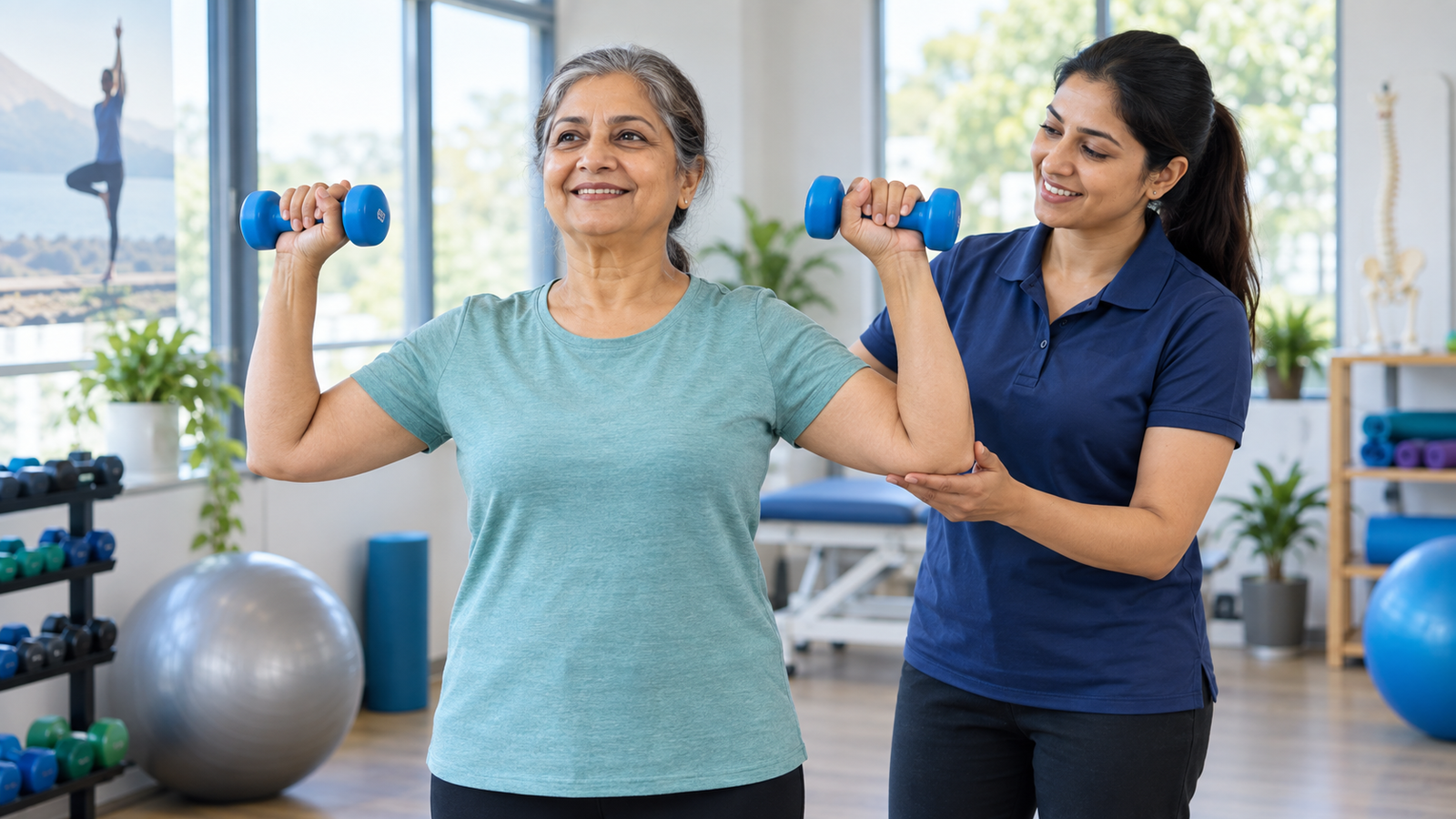
Weight-Bearing and Resistance Exercise [2]
Bone responds to mechanical loading. Walking, stair climbing, and particularly resistance training stimulate bone formation. Swimming and cycling, while excellent for cardiovascular health, do not load bone. Balance training reduces falls, which is where fractures actually happen. See our exercise guide.
Fall Prevention
Most fractures result from falls, so preventing falls prevents fractures:
- Correct vision — cataract surgery measurably reduces fracture risk. See our cataract guide.
- Review medications causing dizziness or drowsiness
- Check for postural blood pressure drops
- Improve home lighting; remove loose mats and clutter
- Install bathroom grab rails and non-slip mats
- Wear supportive footwear indoors — not loose slippers
- Address neuropathy and balance problems — see our neuropathy guide
Medications
- Bisphosphonates (such as alendronate, risedronate, and zoledronic acid) — commonly used first-line medicines that reduce fracture risk in appropriately selected patients. Oral dosing instructions vary by product and should be followed exactly.[5]
- Denosumab — a six-monthly injection, effective, but must not be stopped abruptly as rebound bone loss occurs
- Teriparatide and other anabolic agents — build new bone; reserved for severe osteoporosis or treatment failure
- Menopausal hormone therapy — protects bone; see our menopause guide
Bone Health Assessment at MCR
Vitamin D, calcium status, fracture risk evaluation, and fall prevention review — particularly important if you have diabetes.
Warning Signs of Existing Fractures
Vertebral fractures often occur without any fall and are frequently missed. Suspect them with:
- Height loss of 3-4 cm or more
- A developing stoop or rounded upper back
- Sudden or persistent mid-back pain
- A fracture from a minor fall — falling from standing height should not break a bone
Any fragility fracture after 50 should trigger osteoporosis assessment. This is one of the biggest gaps in care: most patients treated for a wrist fracture are never investigated for the underlying bone disease that caused it.
Bone Health at a Glance
| Area | Target / Action |
|---|---|
| Calcium | 1,000-1,200 mg daily, preferably from food |
| Vitamin D | Correct deficiency; essential for calcium absorption |
| Protein | Adequate intake — bone matrix is largely protein |
| Exercise | Weight-bearing + resistance; swimming does not load bone |
| Best Indian calcium sources | Ragi, curd, sesame, cheera, sardines with bones |
| DEXA screening | Women 65+, men 70+, earlier with risk factors |
| Fracture risk tool | FRAX — especially useful in diabetics |
| First-line medication | Bisphosphonates |
| Fall prevention | Vision, lighting, grab rails, footwear, medication review |
| Red flags | Height loss 3-4 cm, new stoop, fracture from minor fall |
Frequently Asked Questions
Below are the questions our patients ask most often. If you have additional questions, our specialist team at MCR Diabetes & Eye Care, Kannur, is always available to help.
Why do Indians get osteoporosis earlier?
Lower peak bone mass from childhood undernutrition, widespread vitamin D deficiency, calcium intake well below requirements, earlier menopause at 46-48, and low levels of weight-bearing exercise all combine to bring the fracture threshold forward by around a decade.
I have diabetes and my DEXA was normal. Am I safe?
Not necessarily. Diabetic bone is often denser but structurally weaker, so DEXA underestimates fracture risk in diabetes. Clinical risk factors, fall risk, and tools like FRAX should be considered alongside the scan.
Is calcium supplementation enough on its own?
No. Without adequate vitamin D, calcium is poorly absorbed, and without weight-bearing exercise and adequate protein, bone does not rebuild effectively. Calcium alone achieves relatively little.
Does milk cause problems for lactose-intolerant Indians?
Curd and buttermilk are usually well tolerated because fermentation reduces lactose, and they are excellent calcium sources. Ragi, sesame, almonds, leafy greens, and small fish eaten with bones provide good non-dairy alternatives.
Are bisphosphonates safe long term?
They substantially reduce fracture risk and are generally well tolerated. Rare concerns like jaw osteonecrosis and atypical femoral fractures are why treatment is periodically reviewed — often with a planned break after 3-5 years in lower-risk patients.
Which exercises actually build bone?
Bone responds to loading: walking, stair climbing, jogging, and especially resistance training. Swimming and cycling are excellent for cardiovascular fitness but do not load bone, so they should be supplemented with weight-bearing work.
I broke my wrist falling in the bathroom. Do I need testing?
Yes. A fracture from a fall at standing height after 50 is a fragility fracture and the single strongest predictor of future fractures. It should prompt DEXA, vitamin D testing, and fall risk assessment.
Final Takeaway: Silent Until It Isn’t
Osteoporosis gives no warning. By the time a fracture occurs, years of preventable bone loss have already happened. Adequate calcium and vitamin D, resistance and weight-bearing exercise, fall prevention, and timely DEXA screening together prevent most fractures — and for diabetics, whose fracture risk is higher than their bone density suggests, this deserves particular attention.
At MCR Diabetes & Eye Care, Kannur, bone health assessment including vitamin D, calcium status, and fracture risk evaluation forms part of comprehensive preventive care. If you are post-menopausal, over 65, on long-term steroids, or have had a fracture from a minor fall, book an assessment today.
You May Also Find Helpful
- Vitamin D Deficiency in Indians
- Diabetes in the Elderly
- Exercise Guide for Diabetics
- Thyroid Disorders in India
Evidence note: Fracture risk depends on age, previous fractures, menopause, medicines, nutrition, falls, and other health conditions—not bone density alone. Exercise produces modest improvements in bone density and should form part of a broader prevention plan.[1][2]
Sources and Further Reading
- World Health Organization. Fragility fractures fact sheet.
- Cochrane. Exercise for preventing and treating osteoporosis in postmenopausal women.
- Indian Journal of Medical Research. Assessment of osteoporotic fracture risk in an urban Indian population.
- ICMR–National Institute of Nutrition. Dietary Guidelines for Indians—2024.
- Cochrane. Risedronate for preventing osteoporotic fractures in postmenopausal women.