MCR Diabetes & Eye Care · Kannur, Kerala
+91 97444 35552
Walking After Meals With Diabetes: A Safe, Repeatable Routine
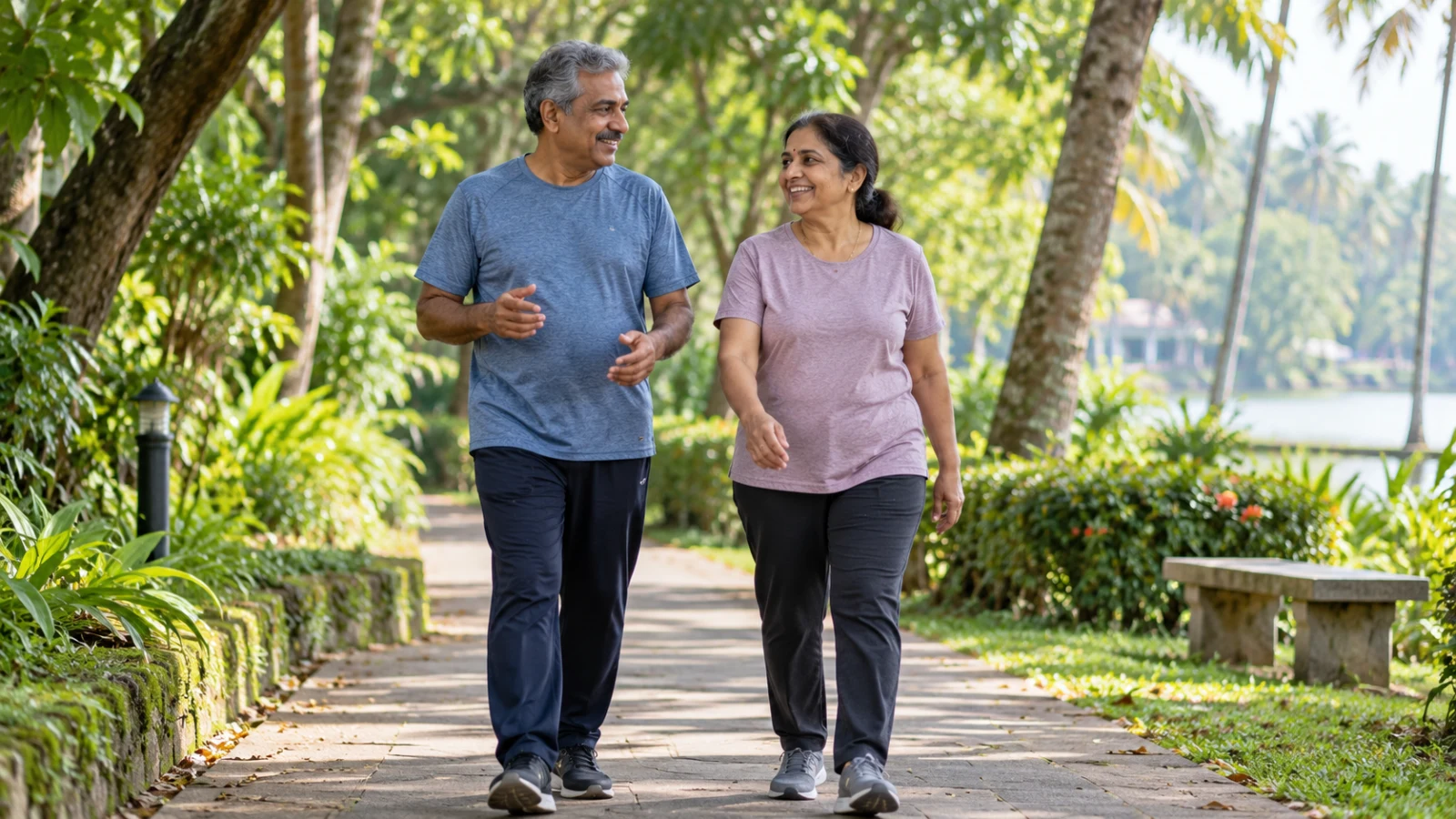
A short walk after eating may fit into your day more easily than a trip to the gym. Discuss it with your diabetes team, especially if treatment or health problems affect your activity. Your fitness, feet and balance all matter when choosing a routine.
Choose something you can repeat safely. Walking cannot cancel a meal or replace medicine, and you cannot count on a particular fall in glucose after each walk.
Choose a small, specific starting point
The CDC gives a 10-minute walk after dinner as one possible starting goal, with gradual increases. [1] That example will not suit everyone. Ask where to begin if you have been inactive, are recovering from illness or have limited mobility.
Pick a time and route, such as "after lunch, around the building". In Kannur, shade or an indoor route may be more practical than a hot roadside. Plan a shorter option for busy days if that suits your advice, so the choice is not always between the full walk and none.
What does the research suggest?
A small study of people with type 2 diabetes found benefits for post-meal glucose with walking after dinner under its study conditions. [2] It supports discussing the habit, but cannot predict your own response. Meals, timing, pace and medicines make before-and-after readings harder to compare.
Ask how short walks fit into your broader activity plan, including any strength or balance exercises recommended for you. The ADA describes spreading activity through the week instead of relying on a single long workout. [3]
Plan for low glucose if your treatment can cause it
Insulin and some diabetes tablets can cause lows during or after activity. Ask when to check glucose, when to postpone a walk and which treatment to carry. Use the advice for your medicines rather than another person's dose adjustment.
Tell your walking companion how to help and learn your usual low-glucose symptoms. Stop and use your care plan if you feel shaky, sweaty, dizzy or confused. Severe symptoms need urgent help. NIDDK explains the activity-related risk and the need for individual advice. [4]
Check the route as carefully as the glucose
Wear suitable footwear. Ask for advice before weight-bearing exercise if you have an open foot wound, a new painful foot problem or have been told to protect the foot. Chest pain, fainting or severe breathlessness needs prompt medical assessment, not an attempt to complete the walk.
Think about rain, slippery surfaces, traffic and water access before setting out. If outside conditions are unsuitable, ask about indoor walking or another activity you can do safely.
Review the habit without chasing a number
If the team asks you to monitor, note the meal, duration of the walk, symptoms and readings at the requested times. A lower result does not mean you can stop medicine. A higher result does not establish that walking has failed.
Key fact: Walking after meals can be a practical habit, but its timing and safety depend on your treatment and health. Research does not promise an identical glucose response for everyone.
Finding a place for a short walk
A meal gives the walk a place in the day. You may find it easier to remember than a vague intention to exercise more. Choose the starting routine to suit your current fitness, health and treatment.
A hot-afternoon walk, gentle indoor stroll and longer brisk outing are different activities. Meals and medicines can differ between days too. Note those details so the team can assess a pattern instead of judging the habit from one glucose value.
Begin with the route
Look for a level route with a safe surface and a way back if you feel unwell. Check traffic, light, rain and shade. Balance problems or limited mobility may make an indoor route or another activity more suitable.
Then decide the routine
Choose the meal after which you have time. Explain if lunch works better than dinner. A schedule that regularly conflicts with work or caring responsibilities will be difficult to maintain, however suitable it looks on paper.
Why readings can differ between walks
Activity can affect glucose during exercise and afterwards. The ADA describes delayed lows with some treatments. [5] Bring your medicine names and usual symptoms into the exercise discussion, and agree a monitoring plan.
Ask whether you need checks before or after walking, and which symptoms or results mean you should postpone it. Carry the recommended low-glucose treatment. Do not walk through a low or take an extra dose to compensate for a meal before leaving.
Explain to a companion how to get help if you become confused or cannot manage safely. They need to know what to do under your plan; you do not need to ask them to diagnose the problem.
Check your feet and footwear
Loss of sensation from diabetes can make foot injuries harder to notice. NIDDK recommends daily checks and footwear that fits. [6] Check a shoe that rubs or leaves a new mark, even if it looks comfortable.
Get advice about an open wound, blister, new swelling or painful foot before continuing weight-bearing activity. A foot may need assessment or protection. Walking is not automatically the right response to a high reading.
Before leaving, check your shoes, route, necessary supplies and how you feel. Use what you find to choose suitable activity that day, rather than assuming the same walk fits every circumstance.
Decide what to review
Agree what you want to review next. It may be how often you walked, whether the route felt safe or what you learned about glucose during activity. A particular meter reading does not have to be the only measure of progress.
Keep brief notes of the timing and duration, symptoms and requested readings. Include days you could not walk. The team can help adapt a routine that does not fit, rather than assuming you only need more motivation.
If it is too difficult, shorten the walk or discuss another activity with the team. If it feels easy, ask how to increase it appropriately. The routine can change with your fitness, health and day-to-day circumstances.
Important: Stop and follow your care plan if you feel low or unwell. Chest pain, fainting or severe breathlessness needs prompt medical assessment. An open foot wound may require a different activity plan.
Planning a walk after meals
| Area | What to Remember |
|---|---|
| Starting point | Choose a manageable duration and a specific meal. |
| Route | Prioritise a safe surface, shade and a way home. |
| Low-glucose risk | Know your monitoring and treatment instructions. |
| Foot health | Check for rubbing, wounds and new symptoms. |
| Progress | Review consistency and repeated patterns, not one reading. |
Common questions
Is ten minutes a medical prescription for everyone?
No. Ten minutes is an example of a small starting goal, not a duration or intensity prescribed for everybody. Ask where to start if you have been inactive, have symptoms or have a condition that affects walking.
Must I walk immediately after eating?
Agree the timing with your care team, especially with medicines that can cause lows. Post-meal activity research does not set one compulsory starting minute for everybody. Choose a routine that fits safely into your day.
Can I walk instead of taking my medicine?
A walk does not replace prescribed treatment. Keep to your plan unless the prescribing clinician changes it. If repeated readings suggest that treatment needs review, bring the record rather than stopping a medicine yourself.
What if glucose does not fall after my walk?
Note the meal, timing, duration and symptoms, with the readings your team requested. Discuss what happens repeatedly. One result cannot show the overall effect, and is not a reason to extend the walk or add treatment to force glucose down.
Should I walk with a blister or foot wound?
Ask for prompt advice about the foot and whether weight-bearing activity is appropriate. Reduced sensation can make an injury easy to underestimate. Protecting and assessing the foot may take priority over completing a walking goal.
What can I do during heavy rain or very hot weather?
A safe indoor route or another activity agreed with the team may be more suitable. Avoid slippery surfaces and unsuitable heat. Choose something shorter if needed, rather than forcing the outdoor walk despite the conditions or your health.
Choose a routine you can use
Choose a route and time you can use safely. Agree how to handle lows and foot problems, then review how the routine worked. Build up as advised, without trying to force a particular reading after every walk.
Discuss activity and diabetes in Kannur
Contact MCR Diabetes & Eye Care about a review and current appointment availability. Bring your medicine list and questions about walking, glucose changes or foot care.
Enquire About an Appointment →Related reading
Sources and further reading
- CDC: Get Active.
- Primary study: Exercise Effects on Postprandial Glycemia in Type 2 Diabetes.
- American Diabetes Association: Physical Activity Targets.
- NIDDK: Low Blood Glucose.
- ADA: Understanding Blood Glucose and Exercise.
- NIDDK: Diabetes and Foot Problems.
Sources checked on 30 October 2026. General educational information; individual care should be planned with your diabetes team. Cover image generated with AI for editorial use; people and settings are fictional.