MCR Diabetes & Eye Care · Kannur, Kerala
+91 97444 35552
Your First Two Weeks With a CGM: What to Record and Review
A new continuous glucose monitor gives you far more information than an occasional blood sugar check. It can also leave you wondering which numbers deserve attention. Spend the first two weeks getting used to the device and noting your ordinary routine. Your care team can help you understand the patterns and recognise when you need help.
This is a practical companion to our CGM guide for India, rather than a recommendation to buy a particular sensor.
Before you start: agree on a plan
Ask what your team hopes to learn from CGM. They may want to look at overnight readings, meal patterns or how your treatment is working. A temporary monitoring period may answer a different question from ongoing sensor use. NIDDK describes how the different systems collect and display readings. [1]
Write down your agreed glucose targets, alert settings, who to contact and when a fingerprick check is needed. Follow the instructions for your exact device: wear duration, insertion site, warm-up, scanning and calibration requirements vary. Keep your meter and usable strips available.
Keep a short diary of ordinary days
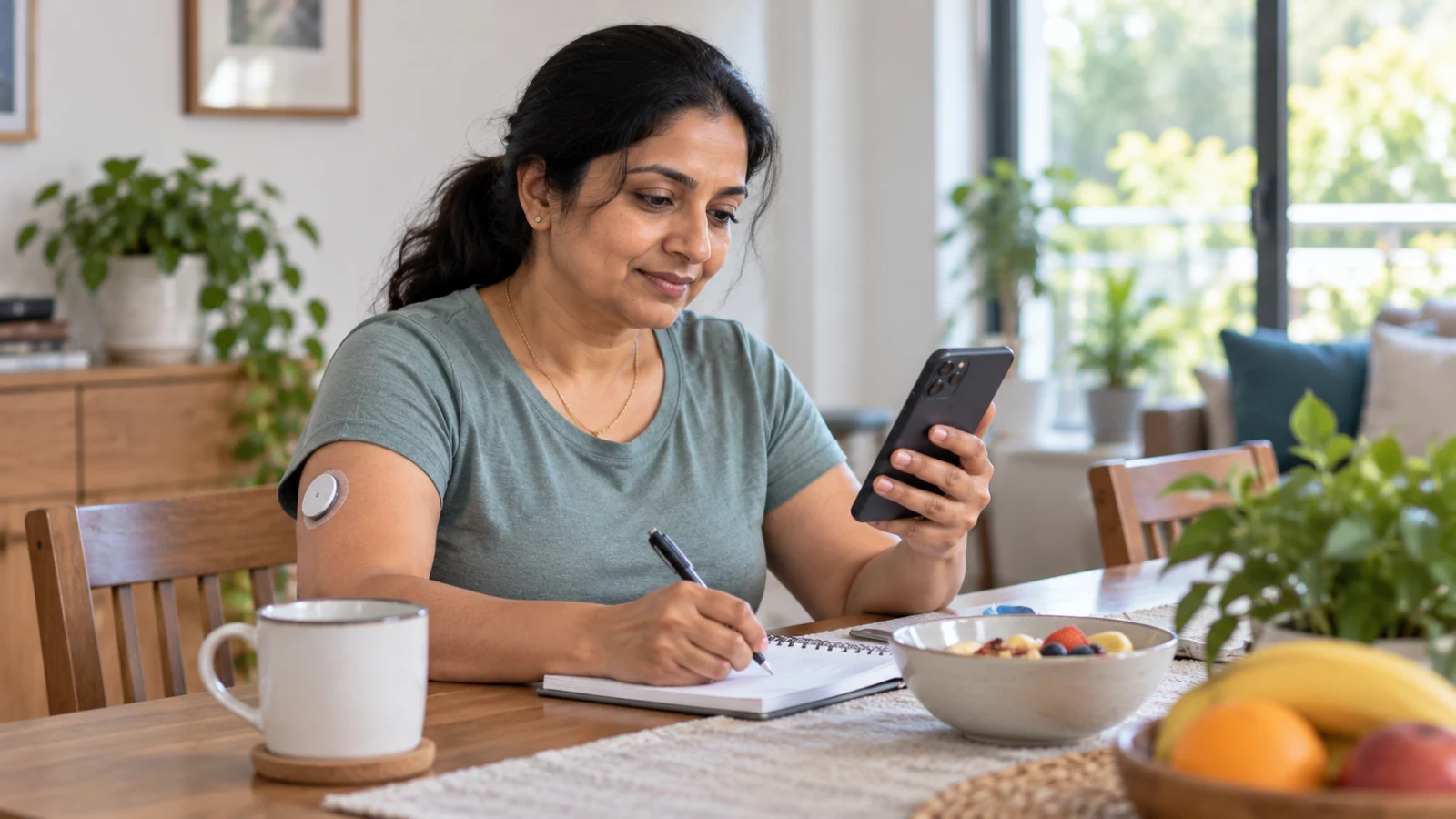
Eat and go about your days as you normally would, within your care plan. An unusually strict fortnight may produce a tidy graph that says little about the routine you can maintain. Keep a few notes to help explain the readings:
- The time you started a meal and a rough description of its portion.
- Medicine timing, exactly as prescribed.
- A walk, a night shift, a delayed lunch or a disturbed night's sleep.
- Symptoms, illness and the action you took under your care plan.
A note such as "rice, fish curry and beans at 1 pm; lunch delayed by a meeting" tells the team more than "bad lunch". You are recording what happened, rather than scoring the meal.
Read the overview before inspecting every peak
Use the current reading and trend arrow as your plan directs. At the review, the summary report lets your clinician look for patterns across days. Time in range is the proportion of time glucose falls within a selected interval. [2] Ask which interval and goal apply to you, especially during pregnancy or if you have a high risk of lows.
The ADA's standard report shows time below, within and above range, along with average glucose, variability and how much data the device recorded. [3] Missing nights or workdays can make the picture incomplete. Bring the whole report, even if some days look better than others.
Put safety ahead of a better-looking graph
Follow your treatment plan when an alert appears. If the reading does not match how you feel, use your meter and the device instructions to check. Ask the team how to respond before trying extra insulin corrections or skipping meals to bring a line down.
Repeated lows, persistent concerning highs, troublesome skin irritation or readings that often seem unreliable are reasons to contact the team. Mention anxiety about meals or the graph too; that belongs in the review.
Questions to bring to the review
- Which repeated pattern deserves attention first?
- What is one realistic change we can assess next?
- When should I repeat monitoring or contact you sooner?
Key fact: A CGM is most useful when its trace is interpreted alongside ordinary meals, medicines, symptoms and activity. More recorded numbers do not automatically mean a clearer treatment decision.
What the daily trace adds
A single glucose value leaves out what came before it. A daily trace can show the reading before a meal, the change afterwards and whether the same thing happened on another day. The notes from those days help your clinician interpret it.
Current glucose and trend arrows
The number is the sensor's estimate of your current glucose. The arrow shows which way it is moving. Neither tells you an insulin dose by itself. Your training and personal plan should explain the response. Write down anything unclear so you can ask, rather than making up a correction rule.
Time in range and time below range
Time in range describes how much of the recorded period falls within your agreed interval. Time below range helps identify possible lows that an acceptable-looking average might hide. The ADA explains why these targets need to suit the person. [4]
The report period matters
Check the dates on the report you download. If they cover a holiday, illness or night shifts, say so. Your clinician needs to know how those days differed from an ordinary working fortnight.
Use the first fortnight to answer your questions
Choose a few questions you want the monitoring period to answer. Does a delayed office lunch often coincide with symptoms? Does an evening pattern recur on different days? You can discuss those questions without testing every breakfast combination, avoiding familiar foods or doing extra exercise for the report.
Short notes are easier to keep up: "breakfast at home", "canteen lunch later than usual", "walk cancelled because of rain". Unless your plan calls for it, you do not have to estimate every ingredient. A meal photograph can help describe a portion, though it cannot interpret the glucose response for you.
If meals and activity both differed on two days, the traces cannot tell you that one ingredient caused the difference. Bring that observation as a question. It does not prove a food is harmful or give you a reliable ranking of everything in your kitchen.
Practical details to settle before starting
- Phone and reader: check compatibility, charging and how you will access readings during work.
- Data access: ask how to share a report with the team and what to do if you cannot use the app.
- Alerts: learn which settings apply and how to respond at home, at work and overnight.
- Replacement and cost: ask about the complete monitoring period and follow-up, rather than only the initial sensor price.
The 2026 ADA technology standards cover device selection, education and continuing support. [5] Check local availability, payment and training with the clinic. An overseas guideline does not confirm local stock or entitlement to Indian insurance cover.
Put your main concern at the top of the diary. "I am worried about the overnight alerts" gives you somewhere useful to start. You do not have to explain every rise in the order it occurred.
Important: Act on concerning symptoms and alerts according to your care plan. Do not wait for a routine report review if you feel seriously unwell, and do not make unplanned insulin corrections to improve the graph.
Your first CGM review
| Area | What to Remember |
|---|---|
| Before starting | Agree the question, targets and alert response. |
| During ordinary days | Note meals, medicines, symptoms and changes in routine. |
| When a value seems wrong | Follow the device and personal safety plan; use the meter when instructed. |
| At review | Examine repeated patterns and decide a realistic next step. |
| After review | Confirm what to change, when to reassess and when to call. |
Common questions
Does two weeks mean every sensor lasts fourteen days?
No. This article uses two weeks as a review period. Sensors have different wear durations and warm-up requirements. Check your model's instructions and ask how its schedule fits the review.
Should I avoid rice while wearing the sensor?
Keep eating the meals you need help planning, within the advice your team has given you. Record the portions and discuss changes that fit your medicines and daily routine. A special diet used only while the sensor is on gives less useful information.
Can I stop fingerprick checks once I start CGM?
Keep it available. Your device instructions or team may call for a fingerprick check, including when symptoms and sensor readings disagree. How often you need one depends on your device and circumstances.
Is a single meal peak enough to change treatment?
Record the meal, its timing and anything unusual, then follow your agreed response. One peak cannot explain the whole pattern. Your clinician needs that context before changing treatment; do not add medicine just to flatten the curve.
What if looking at the app makes me anxious?
Tell the team if checking is making you anxious. Ask which readings need an immediate response and when to review the rest. Looking repeatedly without knowing what to do can become burdensome, and the plan needs to fit daily life.
What should I bring to the CGM review?
Bring your reader or phone, the report for the requested dates, your medicine list and short diary. Include symptoms, alerts and any fingerprick comparisons. A screenshot from one unusually good day leaves out information the team may need.
At your next review
At the review, use your notes and full report to ask which pattern needs attention first. Agree a change you can manage and when to review it. You do not need a perfect trace to have that conversation.
Discuss your CGM report in Kannur
Contact MCR Diabetes & Eye Care about a diabetes review and current appointment availability. Bring your CGM report, medicine list and questions about the readings.
Enquire About an Appointment →Related reading
- Continuous Glucose Monitoring in India: Complete Guide
- Blood Sugar Testing at Home: Methods and Monitoring
Sources and further reading
- NIDDK: Continuous Glucose Monitoring.
- CDC: Continuous Glucose Monitors.
- American Diabetes Association: Standard CGM Report.
- American Diabetes Association: CGM and Time in Range.
- ADA: Diabetes Technology, Standards of Care 2026.
Sources checked on 30 October 2026. General educational information; individual care should be planned with your diabetes team. Cover image generated with AI for editorial use; people and settings are fictional.