
MCR Diabetes & Eye Care · Kannur, Kerala
+91 9497 222 722
Monsoon Health Guide for Diabetics in Kerala: Infections, Foot Care, and Blood Sugar
Kerala’s monsoon — roughly June through September, with a second spell in October-November — transforms daily life. For people with diabetes, it also transforms health risks. Waterborne and mosquito-borne infections surge, constantly wet feet endanger diabetic skin, fungal infections thrive in the humidity, outdoor exercise routines collapse, and comfort eating rises with the rain. None of this is unmanageable — but it needs a deliberate seasonal plan. Our specialist team at MCR Diabetes & Eye Care, Kannur, gives you the complete monsoon playbook.
Evidence-based clinical note: Fever, vomiting and diarrhoea can quickly destabilise glucose. Continue insulin, check glucose more often and follow a personal sick-day plan; fluid advice must be individualised if you have heart or kidney disease. If dengue is possible, avoid aspirin, ibuprofen and other NSAIDs because they can increase bleeding risk, and seek medical advice.
Jun-Sep
Kerala’s main monsoon window
Every year
leptospirosis spikes with the rains
2 pairs
of shoes — the simplest foot-saving rule
4-6 hourly
glucose checks on sick days
Why does monsoon matter more for diabetics? Elevated blood sugar impairs immune function, slows wound healing, and — where neuropathy is present — silences the pain signals that would normally warn of a foot injury or infection. The monsoon multiplies exposure to exactly the hazards diabetics handle worst: contaminated water, persistent skin moisture, hidden underwater hazards, and infection-carrying mosquitoes. A few weeks of preparation prevents most problems. For year-round foundations, see our blood sugar control tips.
Infection Risks That Surge in Monsoon
Leptospirosis (Rat Fever)
Kerala reports a spike in leptospirosis every monsoon. The bacteria spread through water contaminated with animal urine and enter through cuts or softened skin — a particular danger for anyone wading through flood water. Diabetics face higher complication rates. Prevention: avoid wading in stagnant or flood water; if unavoidable, wear waterproof boots, wash thoroughly afterwards, and consult a doctor promptly about preventive doxycycline if exposure was significant. Fever with muscle pain (especially calves) after flood-water contact needs same-day medical attention.
Dengue and Other Mosquito-Borne Illness
Dengue peaks during and after monsoon. High fever, severe body ache, headache behind the eyes, and rash are warning signs. For diabetics, dengue brings extra challenges — illness raises blood sugar, while poor appetite and vomiting can crash it, and dehydration is more dangerous. Prevention: eliminate standing water in and around the house weekly (pots, tyres, coconut shells, fridge trays), use repellents and nets, and wear covering clothing.
Dengue medicine warning: If dengue is possible, do not self-treat with aspirin, ibuprofen or other NSAIDs because they can increase bleeding risk. Seek medical advice, especially for persistent vomiting, severe abdominal pain, breathing difficulty, unusual bleeding, drowsiness or worsening weakness.
Waterborne Stomach Infections
Typhoid, hepatitis A, and gastroenteritis rise sharply. Rules for the season: boiled or reliably filtered water only, extra caution with roadside food and cut fruit, and thorough washing of vegetables. Any vomiting or diarrhoeal illness in a diabetic needs early attention — see the sick-day rules below.
Fungal Skin Infections
Persistent humidity makes fungal infections — between toes, in the groin, under breasts, in skin folds — a near-universal monsoon complaint, and diabetics are markedly more susceptible. Prevention: dry skin folds thoroughly after every wash, change out of damp clothing promptly, prefer cotton innerwear, use antifungal dusting powder in prone areas, and never ignore an itchy, spreading rash — early antifungal treatment is simple; neglected infections in diabetic skin are not.
Key fact: Two pairs of footwear, alternated daily so each dries fully, prevent more monsoon foot problems than any medicine — a damp shoe is a fungal incubator wrapped around the diabetic foot for twelve hours a day.
Monsoon Foot Care: The Non-Negotiable Priority
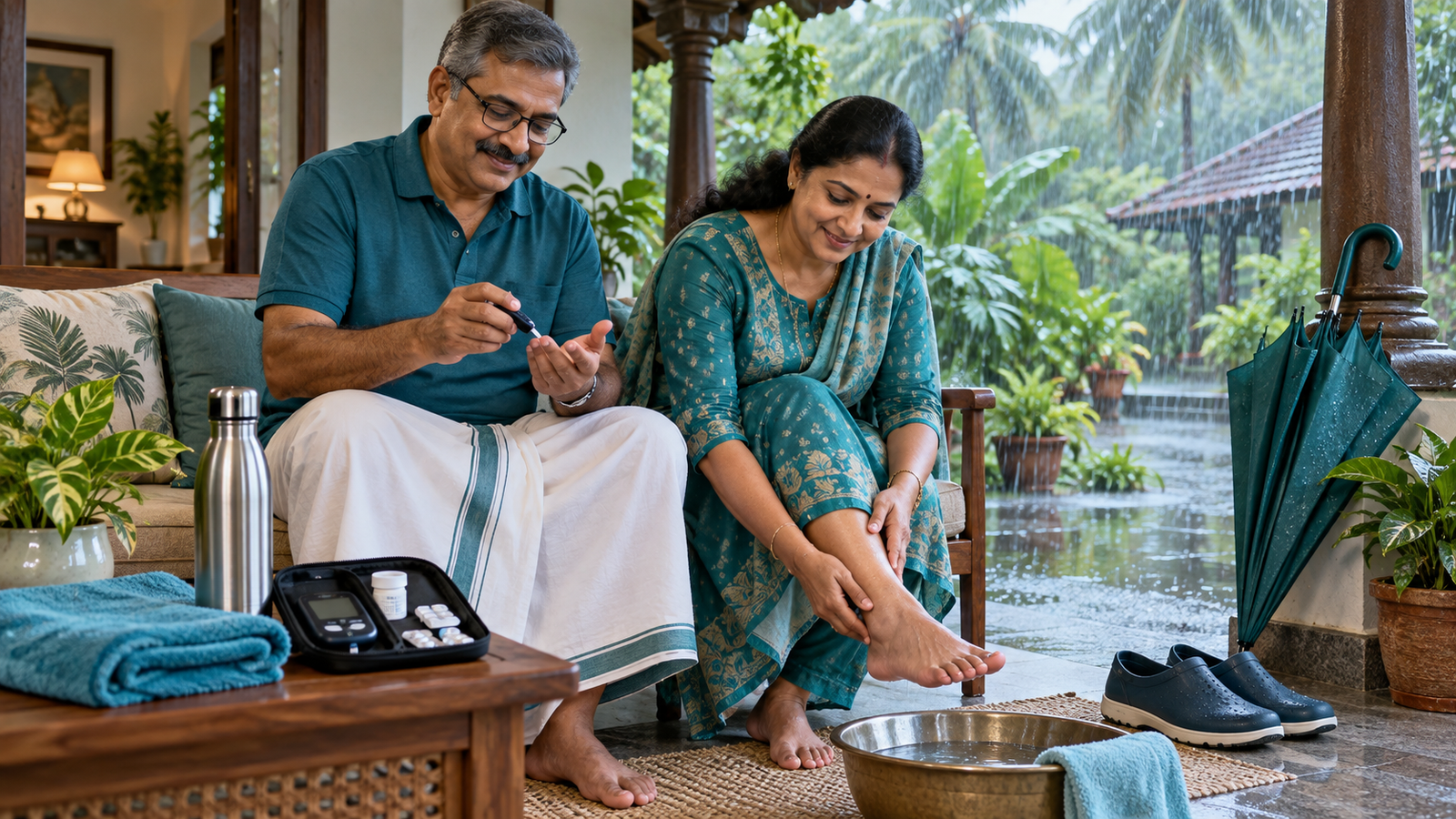
Wet shoes, softened skin, hidden puddle hazards, and fungal growth make monsoon the most dangerous season for diabetic feet. If you have neuropathy — reduced foot sensation — the risk multiplies, because injuries go unfelt. The monsoon foot protocol:
- Never walk barefoot — indoors or out; underwater hazards are invisible
- Dry feet completely after every wetting — especially between the toes
- Own two pairs of footwear — alternate daily so each pair dries fully; a damp shoe is a fungal incubator
- Choose closed, quick-drying footwear — avoid soggy canvas and bare-strap sandals in flooded lanes
- Inspect feet every night — soles, between toes, around nails; use a mirror or a family member’s help
- Treat any break in the skin seriously — wash, antiseptic, dry dressing, and medical review within 24-48 hours if not clearly healing
- Keep nails trimmed straight across and calluses professionally managed
If you have not had a formal foot assessment this year, monsoon is the time — see our diabetic foot test guide and book a screening at MCR’s diabetology service.
⚠ Important: Never stop insulin during a fever or stomach illness, even when you cannot eat normally — illness usually raises insulin requirements, and stopping risks diabetic ketoacidosis. Follow sick-day rules, check glucose every 4-6 hours, and seek urgent care for persistent vomiting, drowsiness, or readings above 300 mg/dL.
Keeping Blood Sugar Steady When Routines Break
The Exercise Problem
Rain cancels walks — and weeks of cancelled walks show up in HbA1c. Indoor alternatives that genuinely work:
- Stair climbing — 10-15 minutes rivals a brisk walk
- Indoor circuits — squats, wall push-ups, lunges, marching on the spot; 3 rounds of 10 minutes
- Yoga — a 30-40 minute home practice maintains insulin sensitivity and manages stress
- Post-meal indoor walking — 10-15 minutes of walking inside the house or veranda after meals preserves the most valuable habit of all
- Covered walkways — malls and covered markets in Kannur work for rain-proof walking
See our full exercise guide for diabetics for structuring the week.
The Food Problem
Monsoon cravings run to fried snacks — pazham pori, parippu vada, bajji — with sweet tea. A daily fried-snack habit through a four-month monsoon can undo a year’s progress. Workable swaps: roasted peanuts or chana with tea, steamed snacks (kozhukkatta with reduced jaggery, sundal), soups, and reserving fried treats for once a week rather than daily. See our guide to hidden sugar spikes.
Vitamin D
Weeks of cloud cover reduce the little sun exposure most people get. If you are already borderline — as most Keralites are — monsoon deepens the deficiency. See our vitamin D guide for testing and supplementation.
Sick-Day Rules for Diabetics
Monsoon illnesses — fevers, stomach infections — destabilise blood sugar in both directions. Every diabetic household should know the sick-day rules:
- Never stop insulin during illness — illness usually raises insulin requirements even when eating poorly; stopping insulin risks ketoacidosis
- Check glucose more often — every 4-6 hours when ill
- Keep drinking if able — take small frequent sips and use ORS when advised; ask for individual fluid limits if you have heart or kidney disease
- If you cannot eat, replace meals with easily tolerated carbohydrate (kanji, rice gruel) and monitor closely
- Metformin and SGLT2 inhibitors may need pausing during vomiting/diarrhoeal illness — confirm with your doctor rather than deciding alone (see our medications guide)
- Seek urgent care for: glucose persistently above 300 mg/dL, repeated vomiting, drowsiness or confusion, rapid breathing, or inability to keep fluids down
| Situation | What to Do |
|---|---|
| Fever / infection | Continue all insulin; check glucose 4-6 hourly |
| Cannot eat solids | Kanji/rice gruel in small amounts; keep monitoring |
| Vomiting or diarrhoea | ORS in sips; ask doctor about pausing metformin/SGLT2 drugs |
| Glucose above 300 mg/dL persistently | Contact doctor same day; check ketones if possible |
| Drowsiness, confusion, rapid breathing | Emergency care immediately |
| Flood-water contact + fever | Same-day review — leptospirosis risk |
Eye Care in the Wet Months
Conjunctivitis (“madras eye”) outbreaks accompany every Kerala monsoon. Diabetics should be extra careful: avoid touching or rubbing eyes, wash hands frequently, never share towels, and avoid self-prescribed steroid eye drops — they can worsen certain infections and raise eye pressure. Red, sticky, or painful eyes deserve professional review at our eye care service, particularly if you have known diabetic retinopathy.
Book a Pre-Monsoon Diabetes Review
Foot screening, vaccination check, vitamin D, and a personalised seasonal plan — four months is too long to leave health to chance.
Your Monsoon Checklist at a Glance
| Area | Action |
|---|---|
| Feet | Two-shoe rotation; dry between toes; nightly inspection; never barefoot |
| Skin | Dry folds thoroughly; cotton innerwear; antifungal powder in prone areas |
| Water & food | Boiled/filtered water; caution with roadside food and cut fruit |
| Mosquitoes | Weekly standing-water sweep; nets and repellents at dawn/dusk |
| Exercise | Indoor plan ready: stairs, circuits, yoga, post-meal indoor walks |
| Snacks | Roasted chana/peanuts over daily fried snacks; sugar-free tea |
| Vitamin D | Test and supplement — cloud cover deepens deficiency |
| Pre-season | Foot screening + flu/pneumonia vaccination review |
Frequently Asked Questions
Below are the questions our patients ask most often. If you have additional questions, our specialist team at MCR Diabetes & Eye Care, Kannur, is always available to help.
Why are diabetics at extra risk during monsoon?
High glucose weakens immunity and slows healing, while neuropathy can silence the pain that would flag a foot injury — exactly the vulnerabilities monsoon multiplies through contaminated water, constant damp, hidden hazards, and mosquito-borne illness.
What should I do if I have to walk through flood water?
Wear waterproof boots if at all possible, avoid it with any open skin, wash and dry feet thoroughly immediately afterwards, apply antiseptic to any cuts, and watch for fever over the following two weeks — seeking same-day care if it appears.
How do I keep exercising when it rains for weeks?
Move the routine indoors rather than pausing it: stair climbing, 10-minute bodyweight circuits, yoga, and post-meal walking inside the house or veranda. The post-meal walks matter most — protect those first.
Are monsoon fevers more dangerous for diabetics?
Any significant infection destabilises glucose and carries higher complication risk in diabetes. The response is earlier testing, closer monitoring, sick-day rules — and never stopping insulin because appetite is poor.
My feet are always damp this season. What is the routine?
Wash and dry completely (especially between toes) after every wetting, alternate two pairs of shoes so each dries 24 hours, use antifungal powder, wear clean cotton socks changed when damp, and inspect soles and toes every night.
Should I change my diet during monsoon?
The main hazards are behavioural: daily fried tea-time snacks and food-safety lapses. Swap to roasted snacks, keep tea sugar-free, insist on boiled water, and be cautious with outside food — the core diabetic plate stays the same.
Is it worth seeing the doctor before the season?
Yes — a pre-monsoon review covering foot screening, vaccination status (flu, pneumococcal), vitamin D, and written sick-day instructions prevents most of what fills clinics every July.
Final Takeaway: Plan the Season, Don’t Just Endure It
The monsoon rewards preparation. A diabetic household with dry footwear rotation, a nightly foot-check habit, an indoor exercise plan, boiled water discipline, mosquito control, and written sick-day rules will sail through the season that catches unprepared families in hospital queues. Four months is too long to put health on hold — build the seasonal system once and reuse it every year.
At MCR Diabetes & Eye Care, Kannur, we see the monsoon’s effects every year — foot infections, fungal problems, destabilised sugars, and dengue-related complications — and nearly all were preventable. Book a pre-season review covering foot screening, vaccination status, vitamin D, and a personalised monsoon plan today.
You May Also Find Helpful
- Diabetic Foot Test: What to Expect
- 15 Blood Sugar Control Tips That Actually Work
- Type 2 Diabetes Symptoms: Early Warning Signs
- Annual Health Check-Up Guide for Indians
Sources and Further Reading
Clinical guidance and evidence reviewed for this article:
- Kerala Directorate of Health Services: Current clinical protocols
- Kerala Directorate of Health Services: Dengue treatment and referral guidelines
- World Health Organization: Dengue and severe dengue
- American Diabetes Association: Sick-day guidance, Standards of Care 2026
This article is for education and does not replace individual medical advice.