MCR Diabetes & Eye Care · Kannur, Kerala
+91 9497 222 722
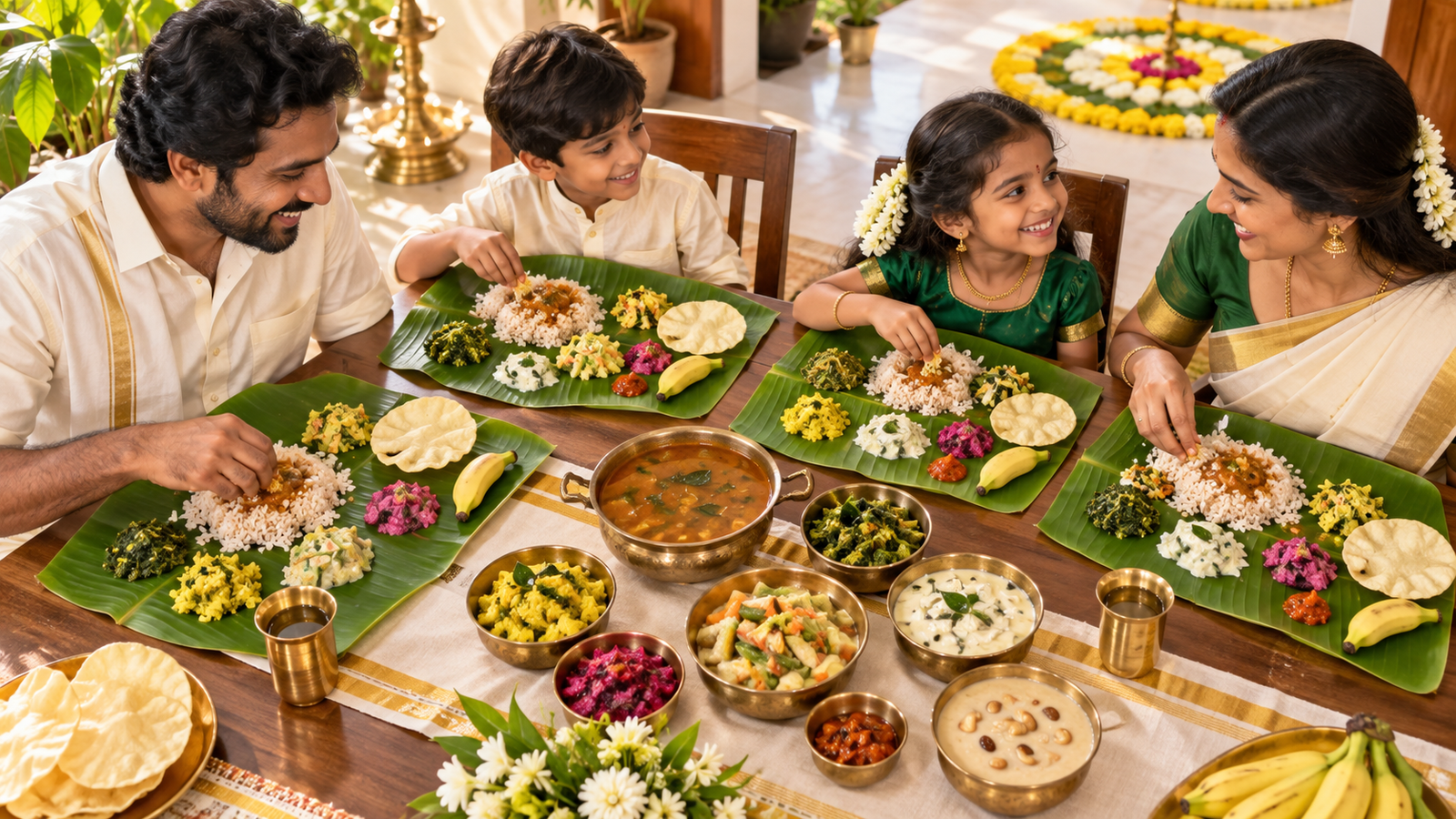
Every year in the weeks before Onam, our clinic hears the same anxious question: can I eat the sadya? The answer is yes — and the advice to “just avoid it” is both unrealistic and unnecessary. A sadya is, structurally, one of the most vegetable-rich meals in Indian cuisine. The problems are concentrated in four places: the rice mound, the payasam round, the sheer number of servings, and the week of leftovers that follows. Our specialist team at MCR Diabetes & Eye Care, Kannur, gives you the dish-by-dish strategy.
Evidence update: There is no single carbohydrate allowance that fits everyone with diabetes. The ADA 2026 nutrition guidance emphasizes individualized portions, culturally familiar meals, vegetables, legumes, minimally processed carbohydrate and limited added sugar. Small controlled studies suggest that eating vegetables and protein before concentrated carbohydrate can reduce the immediate glucose excursion, but this is an adjunct—not a substitute for portion size, medicines and personal glucose monitoring.
Portion-led
carbohydrate in a full traditional sadya
1 cup
the rice serving that makes it workable
100 ml
one small payasam, chosen not sampled
20-30 min
the walk that does the most work
A full traditional sadya can deliver 1,200-1,800 calories and 200-250 g of carbohydrate in a single sitting — roughly a whole day’s carbohydrate for many diabetics. But that figure comes overwhelmingly from rice, payasam, and the sweeter accompaniments, not from the vegetable dishes. Restructure the leaf and the same meal becomes manageable. For year-round guidance, see our Kerala foods and blood sugar guide.
The Sadya, Dish by Dish
| Dish | Verdict | Guidance |
|---|---|---|
| Thoran (any vegetable) | Excellent | Eat freely — fibre and coconut, minimal carbohydrate |
| Avial | Excellent | Eat freely; vegetables and coconut |
| Olan | Excellent | Light coconut milk, ash gourd — very low impact |
| Kalan / pachadi / kichadi | Good | Curd-based; curd slows glucose absorption |
| Parippu with ghee | Good | Protein and fibre; take with your rice |
| Sambar | Good | Vegetables and dal; a sound rice partner |
| Rasam | Good | Negligible carbohydrate |
| Rice | Limit | One levelled cup; decline repeat servings early |
| Papadam | Limit | 1-2 pieces; fried refined flour |
| Injipuli / naranga curry | Fine | Tiny quantities; some added jaggery |
| Pulissery | Fine | Curd-based, moderate |
| Banana chips | Restrict | Starch plus oil — a small handful at most |
| Sharkara varatti | Restrict | Jaggery-coated fried banana — highest impact item |
| Payasam | Choose one | One small cup (~100 ml), slowly, at the end |
| Nendran banana | Restrict | Half a banana counts as a full fruit serving |
Before the Sadya
- Do not skip breakfast. Arriving starving guarantees overeating. A protein-based breakfast — eggs, or ragi puttu with kadala — steadies you.
- Take your medication as usual. Never skip doses in anticipation, and never take extra without medical advice.
- Check your blood sugar before the meal so you have a baseline.
- Drink water beforehand — thirst and appetite are easily confused.
- Take a walk in the morning. Exercise before a large meal improves how your body handles it.
Key fact: Most of a sadya is vegetables. The carbohydrate load is concentrated in four places — the rice mound, the payasam round, the sharkara varatti and chips, and the repeat servings. Restructure those four and the same meal becomes entirely manageable.
The Strategy at the Leaf
1. Let the Vegetables Come First
Eat thoran, avial, olan, kalan, pachadi, and kichadi before touching the rice. This is practical portion support, and small controlled studies suggest that eating vegetables and protein before concentrated carbohydrate can reduce the immediate glucose rise from what follows.
2. Accept Rice Once
Servers will circle repeatedly. Accept one modest serving — roughly one cup — and decline politely afterwards. Saying “kurach mathi” early and firmly is far easier than stopping after the third helping.
3. Prioritise Parippu and Sambar Over Sweet Curries
Dal and sambar bring protein and fibre. Take these with your rice rather than pairing rice with the sweeter, coconut-heavy preparations.
4. Treat the Papadam and Chips as Optional
Sharkara varatti and banana chips are the highest-impact items on the leaf per bite. One or two pieces if you want them; the jar afterwards is where the damage happens.
5. Choose One Payasam
A sadya may offer palada, ada pradhaman, semiya, and pal payasam. Choose one, take a small cup — around 100 ml — and eat it slowly at the end, after a substantial vegetable-and-protein base. Ada pradhaman and palada both carry significant rice, sugar, and jaggery; the size of the serving matters far more than which you pick.
6. Slow Down
Sadya is traditionally eaten quickly. Deliberately slowing down gives satiety signals time to arrive and reduces total intake without any conscious restriction.
⚠ Important: Never skip medication doses in anticipation of a large meal, and never improvise extra insulin afterwards without a plan agreed in advance with your doctor. Both are common causes of hypoglycemia during festival season — particularly as sadyas often start hours later than your usual mealtime.
After the Sadya
- Walk for 20-30 minutes within an hour of finishing. This is the single most effective post-meal intervention available.
- Check your blood sugar at two hours. Whatever the number, treat it as information rather than a verdict.
- Do not “correct” with extra medication beyond what your doctor has specifically advised — improvised dosing after festival meals is a common cause of hypoglycemia. See our hypoglycemia guide.
- Keep dinner very light — soup, curd, a small vegetable dish, or simply skip it if you are not hungry.
- Return to normal the next morning. One meal is a blip; a fortnight of leftovers and repeat sadyas is a setback.
The Real Risk: The Onam Season, Not the Sadya
Onam is not one meal. It spans days of visits, invitations, sweets in the house, and leftovers. Blood sugar patterns in September clinics reliably reflect this. Practical containment:
- Attend sadyas, but do not eat sadya-sized meals daily for a week
- Send leftovers home with guests rather than keeping payasam in the fridge
- Keep roasted chana, peanuts, and cut vegetables available so the visible snack is not always fried or sweet
- Protect your walking routine through the festival period, even shortened
- Resume normal eating patterns the day after each celebration, not “after Onam finishes”
Plan Your Festival Season With Us
Personalised strategies for Onam, Vishu, and family celebrations — plus a post-festival review to see where your control stands.
Special Situations
If You Take Insulin
Larger carbohydrate loads may need dose adjustment, but this must be planned with your diabetologist in advance — not improvised at the table. Carry fast-acting glucose, as a big meal followed by a long walk can occasionally produce a low.
If You Take Sulphonylureas
Glimepiride and gliclazide raise hypoglycemia risk if a meal is delayed. Sadyas often start late; do not skip your usual meal waiting for the feast — have a small snack at your normal time.
If You Have Kidney Disease
Sadyas are high in salt and, through coconut and banana, potassium. If you have been given restrictions, they still apply on festival days — see our kidney function guide.
If You Have Just Been Diagnosed
Your first Onam after diagnosis often feels like a loss. It need not be. The strategy above is the same one long-term patients use, and most report enjoying the meal more once they stop treating it as forbidden.
Your Onam Plan at a Glance
| Stage | Action |
|---|---|
| Morning | Normal medication; protein breakfast; a walk |
| Before leaving | Check blood sugar; drink water |
| At the leaf — first | Thoran, avial, olan, kalan, pachadi |
| At the leaf — then | One cup rice with parippu and sambar |
| Repeat servings | Decline politely and early |
| Sweets | One payasam, small cup, eaten slowly last |
| Within the hour | Walk 20-30 minutes |
| 2 hours after | Check blood sugar — information, not judgement |
| Dinner | Very light, or skip if not hungry |
| Next morning | Return to normal routine immediately |
Frequently Asked Questions
Below are the questions our patients ask most often. If you have additional questions, our specialist team at MCR Diabetes & Eye Care, Kannur, is always available to help.
Can a diabetic eat sadya at all?
Yes. A sadya is structurally one of the most vegetable-rich meals in Indian cuisine. With vegetables first, one rice serving, one small payasam, and a walk afterwards, it fits comfortably into good diabetes management.
Which payasam is the least harmful?
The differences between palada, ada pradhaman, and semiya are small — all combine rice or wheat with sugar or jaggery and milk. The serving size matters far more than the choice. One small cup of any of them, eaten after a substantial vegetable base.
Should I skip breakfast to save room for the sadya?
No. Arriving very hungry reliably leads to overeating, and skipping meals is dangerous if you take insulin or sulphonylureas. A protein-based breakfast steadies both appetite and blood sugar.
My sugar was 280 after the sadya. Have I done damage?
A single elevated post-meal reading after a festival meal does not cause lasting harm. Walk, hydrate, keep dinner light, and resume normal eating the next day. The pattern over weeks matters, not one number.
Can I take extra medication to cover the meal?
Only if your doctor has given you a specific plan in advance. Improvised extra doses after large meals are a frequent cause of hypoglycemia, especially combined with a post-meal walk.
What about the week of leftovers and repeat sadyas?
This is where the real risk sits. One sadya is a blip; ten days of festival eating is a setback. Send leftovers home with guests, keep roasted snacks available, and protect your walking routine through the season.
I have kidney disease — does that change anything?
Yes. Sadyas are high in salt and, through coconut and banana, potassium. If you have been given restrictions, they apply on festival days too. Discuss a specific plan with your doctor beforehand.
Final Takeaway: Enjoy It, Then Reset
Diabetes management that cannot accommodate Onam is not sustainable management. A single sadya, eaten with vegetables first, one rice serving, one small payasam, and a walk afterwards, is entirely compatible with good control. The discipline that matters is not at the leaf — it is in the days that follow.
At MCR Diabetes & Eye Care, Kannur, we plan around Kerala’s festival calendar with our patients rather than pretending it does not exist. If you want a personalised festival strategy — or a post-Onam review of where your control stands — book a consultation today.
You May Also Find Helpful
- Kerala Foods and Blood Sugar: Rice, Tapioca, Coconut
- Diabetes Diet Chart India
- Hypoglycemia: Symptoms and Emergency Treatment
- 15 Blood Sugar Control Tips That Actually Work
Sources and Further Reading
Clinical recommendations and key claims in this article were checked against the following guidance and research. Individual care should be discussed with your clinician.