
MCR Diabetes & Eye Care · Kannur, Kerala
+91 9497 222 722
Diabetic Foot Ulcers: Prevention, Early Treatment, and How to Avoid Amputation
A diabetic foot ulcer typically begins as something trivial — a blister from new footwear, a small cut from a stone, a callus that cracked. In a foot with normal sensation and blood flow, it heals in days. In a diabetic foot with neuropathy and reduced circulation, it can go unnoticed, become infected, and reach bone within weeks. Many diabetes-related amputations are preceded by an ulcer, and early risk assessment plus prompt multidisciplinary care can prevent avoidable limb loss. Our specialist team at MCR Diabetes & Eye Care, Kannur, sets out the prevention routine and the treatment pathway.
Evidence-based clinical note: Any blister, skin break, redness, warmth, swelling, drainage, bad smell or colour change in a diabetic foot needs prompt assessment by a trained clinician. Do not cut callus yourself, soak an ulcer or start leftover antibiotics. Effective care addresses pressure offloading, infection and blood supply—not dressings alone.
Many
amputations are preceded by an ulcer
Daily
foot checks support early detection
Offloading
the most neglected part of ulcer treatment
24 hours
how soon a new foot wound needs review
Three factors combine to create the diabetic foot: neuropathy removes the pain that would warn you, peripheral arterial disease starves the tissue of the blood needed to heal, and high glucose weakens the immune response to infection. Any one is manageable; together they turn a minor injury into a limb-threatening problem. See our guides on diabetic neuropathy and the diabetic foot test.
Who Is at Risk — And How Risk Is Graded
| Risk Level | Features | Foot Check Frequency |
|---|---|---|
| Very low | Normal sensation, normal pulses | Annually |
| Low | Loss of sensation OR reduced pulses | Every 6-12 months |
| Moderate | Loss of sensation AND reduced pulses, or deformity | Every 3-6 months |
| High | Previous ulcer, previous amputation, or dialysis | Every 1-3 months |
| Active | Current ulcer, infection, or suspected Charcot foot | Immediate specialist care |
Knowing your risk category determines how often your feet should be professionally examined and how aggressive prevention needs to be. Ask your diabetologist which category you fall into.
Key fact: A warm, red area under a callus is a pre-ulcer. Treated at that point with pressure relief and professional callus removal, it resolves completely. Left for two more weeks of walking, it becomes an open wound that may take months to heal.
Warning Signs That Precede an Ulcer
- Numbness, tingling, or burning in the feet
- Loss of the ability to feel a light touch or temperature
- Thick calluses, especially under the ball of the foot or the big toe
- Dry, cracked skin, particularly at the heels
- Changes in foot shape — clawed toes, a collapsed arch, prominent bones
- Persistent redness or a warm spot — often the earliest visible sign of tissue breakdown
- Ingrown or thickened nails
- Fungal infection between the toes
- Cramping calf pain when walking that eases with rest (claudication — a circulation warning)
- Cold, pale feet with weak pulses
A red or warm area under a callus is a pre-ulcer. Treated at that point — with pressure relief and callus removal by a professional — it resolves. Left another two weeks, it becomes an open wound.
⚠ Important: Never use over-the-counter corn caps, acid plasters, or self-cut calluses on a diabetic foot — these cause chemical burns and ulcers in feet that cannot feel the damage. Equally, never apply turmeric, oil, ash, or toothpaste to an open diabetic wound.
The Daily Prevention Routine
Inspect Every Day
Look at the whole foot — top, sole, heel, between every toe — in good light. Use a mirror on the floor or ask a family member if you cannot see or reach comfortably. This takes 60 seconds and is the highest-value habit in this entire guide.
Wash and Dry Properly
Wash daily in lukewarm water — test the temperature with your elbow or a thermometer, never your feet, since neuropathy makes scalding easy. Dry thoroughly, especially between the toes, where trapped moisture breeds fungal infection. In Kerala’s humidity this matters year round and doubly during monsoon — see our monsoon health guide.
Moisturise — But Not Between the Toes
Apply moisturiser to the tops, soles, and heels to prevent cracking. Leave the spaces between toes dry.
Never Walk Barefoot
Not outdoors, not indoors, not in the bathroom, not in a temple courtyard. Hot surfaces, stones, and dropped objects cause injuries that are never felt.
Check Footwear Before Wearing
Shake out shoes and run a hand inside before every wear. Small stones, insects, and a folded sock have all caused ulcers.
Choose Footwear Properly
- Closed, well-fitting shoes with a wide, deep toe box
- Soft insoles and cushioned soles; custom orthotics if deformity is present
- Buy footwear in the evening, when feet are largest
- Break in new shoes gradually — one hour on day one, inspecting afterwards
- Seamless, cotton or wool socks changed daily; never tight elastic tops
- Avoid flip-flops for extended walking, and never for outdoor work
Professional Nail and Callus Care
Cut nails straight across, not into the corners. If your vision, reach, or nail thickness makes this difficult, have it done professionally. Never cut calluses or corns yourself, and never use over-the-counter corn caps or acid plasters — they cause chemical burns and ulcers in diabetic feet.
If You Find a Wound
- Stop walking on it. Pressure is what prevents healing; offloading is what allows it.
- Wash gently with clean water and mild antiseptic.
- Cover with a clean, dry dressing.
- Seek medical review within 24 hours. Not next week, not when it worsens.
- Do not apply turmeric, oil, ash, toothpaste, or unverified traditional remedies to an open diabetic wound.
Go to hospital immediately if there is spreading redness, swelling, pus, foul smell, black tissue, fever, or a sudden rise in blood sugar — these indicate serious infection.
Book a Structured Foot Assessment
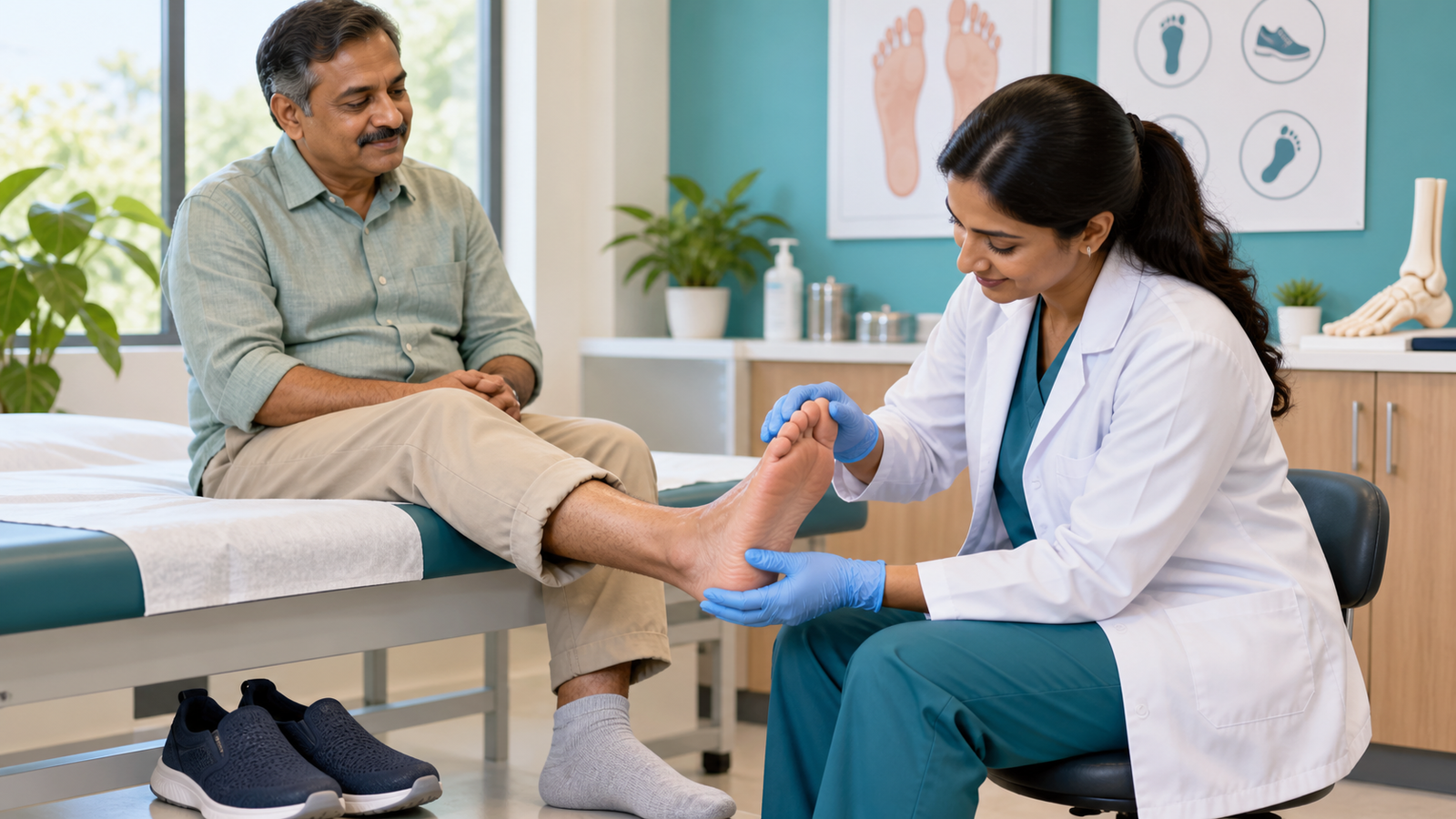
Monofilament sensation testing, pulse examination, deformity and footwear review — the annual check that keeps small problems small.
How Ulcers Are Treated
Offloading Pressure
The most important and most neglected component. Total contact casts, removable walkers, or specialised footwear take weight off the wound. An ulcer that is walked on daily will not heal regardless of how good the dressings are.
Debridement
Removal of dead tissue and surrounding callus by a trained professional, repeated at intervals. This exposes healthy tissue and allows healing to progress.
Infection Control
Antibiotics are used only when clinical infection is present; tissue sampling after cleaning or debridement may help guide choice in appropriate cases. Deep infection or suspected bone involvement (osteomyelitis) requires imaging and often prolonged antibiotics or surgery.
Restoring Blood Supply
If circulation is inadequate, no wound will heal. Doppler studies and ankle-brachial index testing assess flow; angioplasty or bypass may be needed. This assessment is essential and frequently delayed.
Advanced Wound Therapies
Modern dressings, negative pressure wound therapy, skin substitutes, and hyperbaric oxygen in selected cases.
Glucose Control
Healing is markedly slower with high glucose. Insulin is often used temporarily during ulcer treatment even in patients otherwise managed on tablets — see our medications guide.
Charcot Foot: The Emergency People Miss
In a neuropathic foot, bones can weaken and collapse after minor trauma, producing a red, hot, swollen foot that is often mistaken for infection or gout. Early Charcot arthropathy is a genuine emergency — continuing to walk on it destroys the foot’s architecture permanently. Any diabetic with a red, warm, swollen foot without an obvious wound needs urgent assessment and, usually, immediate immobilisation.
Foot Ulcer Prevention at a Glance
| Habit | Detail |
|---|---|
| Daily inspection | Whole foot including between toes; use a mirror |
| Never barefoot | Indoors, outdoors, bathroom, temple — always footwear |
| Dry between toes | Every wash; prevents fungal breakdown |
| Moisturise | Tops, soles, heels — never between toes |
| Check shoes before wearing | Shake out and feel inside every time |
| Footwear | Closed, wide toe box, cushioned; buy in the evening |
| Nails | Cut straight across; professional care if difficult |
| New wound | Offload, clean, cover, medical review within 24 hours |
| Emergency signs | Spreading redness, pus, smell, black tissue, fever |
Frequently Asked Questions
Below are the questions our patients ask most often. If you have additional questions, our specialist team at MCR Diabetes & Eye Care, Kannur, is always available to help.
How often should I really check my feet?
Every single day, and it takes about a minute. Daily inspection is the single highest-value habit in diabetic foot care — it catches problems while they are still trivial, which is the entire game.
My foot is red, hot, and swollen but there is no wound. What is it?
This needs urgent assessment. It could be infection, gout, or Charcot foot — bone collapse in a neuropathic foot. Charcot is a genuine emergency because continuing to walk on it permanently destroys the foot’s structure.
Why does my ulcer keep coming back?
Usually because pressure was never properly offloaded, or because the underlying cause — deformity, poor footwear, unaddressed circulation problems — was not corrected. Recurrence rates are high without prescription footwear and ongoing specialist follow-up.
Can I use my usual antiseptic and dressing at home?
For a very minor superficial wound, cleaning and covering while awaiting review is reasonable. But a diabetic foot wound should always be professionally assessed within 24 hours — home management alone is how small wounds become serious infections.
Do I need special diabetic footwear?
In the low-risk categories, well-fitting ordinary shoes with a wide toe box are usually enough. Once there is loss of sensation, deformity, or a previous ulcer, custom orthotics or prescription footwear substantially reduce recurrence.
Is walking bad for my feet if I have neuropathy?
No — exercise is important and protective. Adapt it: wear proper footwear, inspect feet before and after, prefer low-impact options like cycling or swimming if sensation is significantly reduced, and never walk on an active ulcer.
How long do foot ulcers take to heal?
With good offloading, debridement, infection control, and adequate blood supply, many heal in 6-12 weeks. Poor circulation, ongoing pressure, or high blood sugar can extend this to many months — which is why each of those needs addressing.
Final Takeaway: Sixty Seconds a Day
The single intervention that prevents most diabetic amputations is a daily foot inspection that takes about a minute. Add well-fitting footwear, never walking barefoot, professional nail care, and an annual foot examination, and the risk falls dramatically. None of this requires money or technology — only the habit.
At MCR Diabetes & Eye Care, Kannur, we perform structured foot risk assessment including monofilament testing, pulse examination, and footwear review at annual diabetes checks. If you have numbness in your feet, a callus that will not go, or a wound that is not healing, do not wait — book an assessment today.
You May Also Find Helpful
- Diabetic Foot Test: What to Expect
- Diabetic Neuropathy: Symptoms and Treatment
- Monsoon Health Guide for Diabetics in Kerala
- 15 Blood Sugar Control Tips That Actually Work
Sources and Further Reading
Clinical guidance and evidence reviewed for this article:
- NICE NG19: Diabetic foot problems—prevention and management
- International Working Group on the Diabetic Foot: 2023 guidelines
- American Diabetes Association: Retinopathy, neuropathy and foot care, Standards of Care 2026
- Cochrane: Pressure-relieving interventions for diabetic foot ulcers
This article is for education and does not replace individual medical advice.